
with azbil
Trivia
Meters
When measuring length, we naturally use the unit “meter (m).” However, have you ever wondered, “How was this length originally defined?”
In fact, the “meter” has a surprisingly long history, connecting the human body to the Earth and the natural world.
Before the invention of the meter, many units of length were used in different countries and regions worldwide. For example, the “foot” used in the West is based on the length of the foot, and the “yard” is the distance from the tip of the nose when the arm is outstretched. Many measurements were therefore based on the human body. This method is convenient because it allows measurement without tools, but since people’s bodies differ in size, the results are inevitably imprecise.

In the 18th century in France, some people proposed, “Let’s establish a unit of length that will be the same no matter who measures it.” The size of the Earth caught their attention. They measured the distance from the equator to the North Pole, and determined that 1 m was 1/10 million of that distance. This was a grand idea, and by using the Earth as a reference, they established a more universal and fair standard.
However, since it would be impractical to measure the Earth every time, a “meter prototype” was created, a metal bar reproducing that length. For some time, this prototype served as the standard meter.
Because metals expand and contract slightly depending on temperature, this prototype had an inherent weakness. As a result, a more precise standard became necessary, and the current definition of the meter was established in 1983.
Today, one meter is officially defined as “the distance that light travels in a vacuum in 1/299,792,458 of a second.”
By using the universal laws of nature, people all over the Earth can now use exactly the same unit of length.
Feet and yards are still widely used in the United States, and these body-based units remain part of everyday life and culture because they are easy to imagine intuitively.
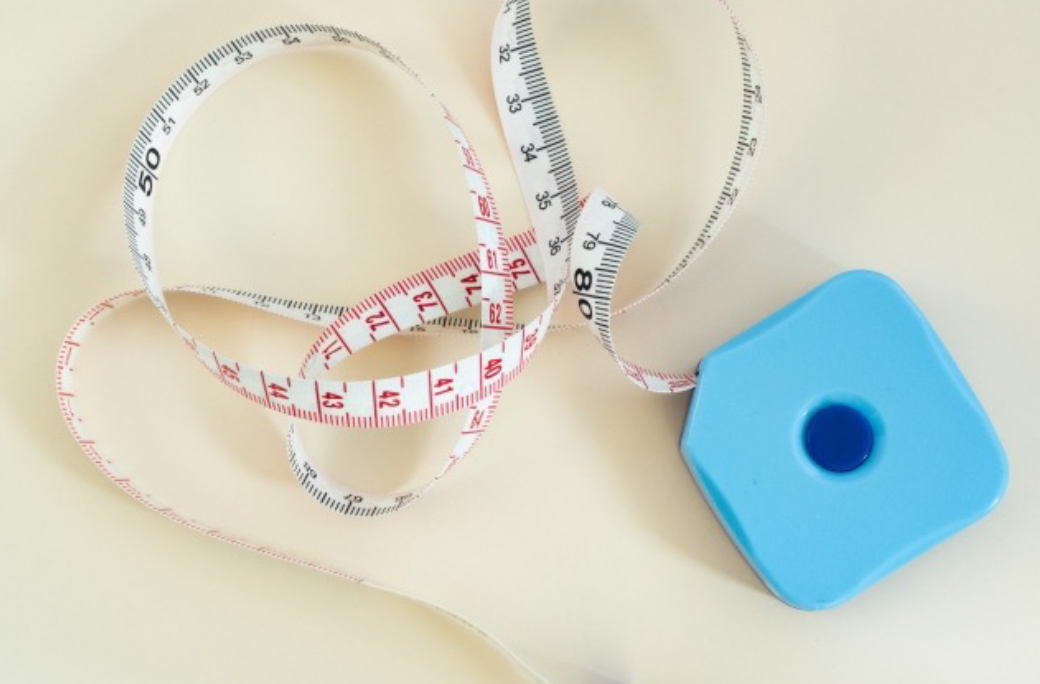
The meter forms the basis for many measurements essential to daily life, such as the height of buildings, the width of roads, travel distances, body shape, and the design of living spaces. In manufacturing, an accurate understanding of dimensions is the starting point. Because we have the meter, a truly universal unit, we can create safe and comfortable environments.
The history of the “meter,” which we usually take for granted, turns out to be a grand story stretching from the Earth itself to the speed of light. When you pick up a ruler or tape measure, remembering the trial and error of people in the past may make familiar numbers feel slightly more intriguing.
Reference:
“The Signing of the Meter Convention and the Arrival of the Prototype in Japan” (in Japanese) published by the National Institute of Advanced Industrial Science and Technology
https://unit.aist.go.jp/nmij/library/nmij_icp/introduction.html
“Explore! The World of Weights and Measures” (in Japanese) published by the Tokyo Metropolitan Government Inspection Institute of Weights and Measures
https://www.shouhiseikatu.metro.tokyo.lg.jp/keiryo/policy/documents/tanken-keiryounosekai220328.pdf
- *This article is a translation of the Japanese version published on February 10, 2026.
 Related information