with azbil
azbil MIND
Azbil Thailand accelerates value creation in Thailand, building on 30 years of history
Further evolution as the company celebrates its 30th anniversary
What contribution will Azbil Thailand make to Thailand?
Azbil Thailand, azbil Group’s local subsidiary in Thailand, celebrated its 30th anniversary in 2025. Through its products and services, the company has contributed to Thailand’s economic development and the resolution of social issues for 30 years through both the advanced automation (AA) business and the building automation (BA) business. As azbil Group’s largest base in Southeast Asia, it is expected to lead the development of global business.
The history of the Thai subsidiary, a pioneer in azbil Group’s expansion into Southeast Asia
The azbil Group has expanded its business worldwide, establishing bases in various regions, including China, Southeast Asia, the United States, and Europe. As part of this global business expansion, Azbil (Thailand) Co., Ltd. (Azbil Thailand) was established as azbil Group’s first local subsidiary in Southeast Asia.
In the 1990s, the number of Japanese companies expanding into Thailand, particularly in the manufacturing industry, accelerated, and Azbil Corporation (then Yamatake-Honeywell Co., Ltd.) also took note of the market potential at an early stage. In particular, Azbil has been working closely with Japanese engineering, procurement, and construction companies responsible for plant construction in Rayong Province, an area of the Eastern Economic Corridor*1, a special economic zone promoted by the Thai government as part of its efforts to advance the country’s industrial structure. Against this backdrop, Yamatake (Thailand) Co., Ltd. (now Azbil Thailand) was established in Bangkok, the capital, in 1995 with the aim of expanding into plant and factory businesses.
Since its founding, Azbil Thailand has focused on the AA business, which handles the automation of plants and factories. In addition, the company has expanded into the BA business that provides air-conditioning systems for large-scale buildings. Through product sales and services, such as engineering, installation, and maintenance, the company has steadily grown its business in Thailand.
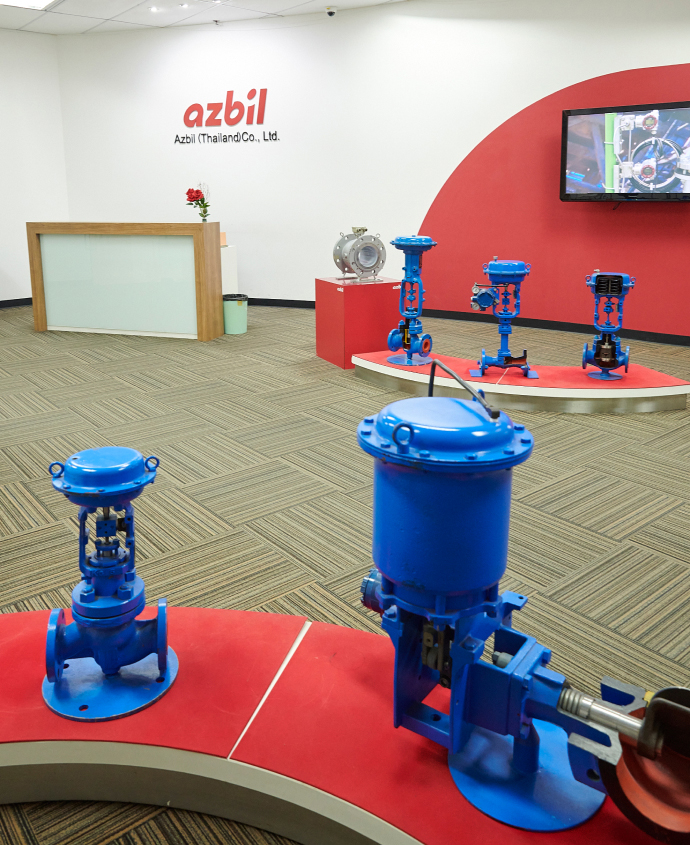
Azbil Thailand’s headquarters in Bangkok, the capital of Thailand
Expanding business areas through enhanced solutions and energy-saving measures
Amid these business developments, the existence of the valve maintenance center established in Rayong Province as a service base for the AA business is a major strength. Rayong Province is an industrial area facing the sea where petrochemical complexes are concentrated, and each plant operating there makes extensive use of control valves to control various fluids, including chemicals.
Azbil Thailand began providing valve maintenance services in 1996 and expanded its facilities, functions, and personnel in 2006. As a valve maintenance center, the company accepts valves operating at customer plants, regardless of whether they are manufactured by Azbil or other companies, and has established a system for regular overhaul inspections and repairs. It has continued to operate as one of the largest valve maintenance bases in Southeast Asia.
Furthermore, in 2019, in response to the recent trend toward digital transformation and to further evolve its services, the company established a new Solution and Technology Center in the southern part of Rayong Province. In addition to conventional valve maintenance, the company provides smart industrial safety*2 services that utilize the latest digital technologies such as AI, as well as application-based valve analysis and diagnostic services.
The Solution and Technology Center also houses a showroom where various demonstrations, including DCS*3 and instrumentation equipment, can be conducted, as well as an office responsible for sales and marketing; therefore, customers often visit the center, and it continues to evolve as a core base for customer support.
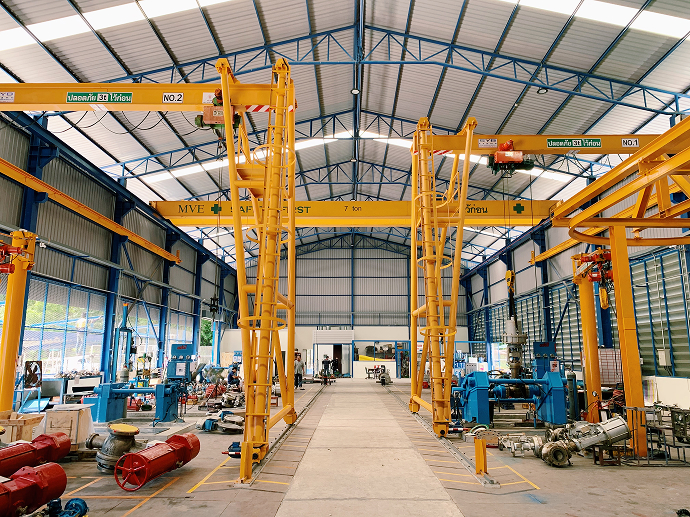
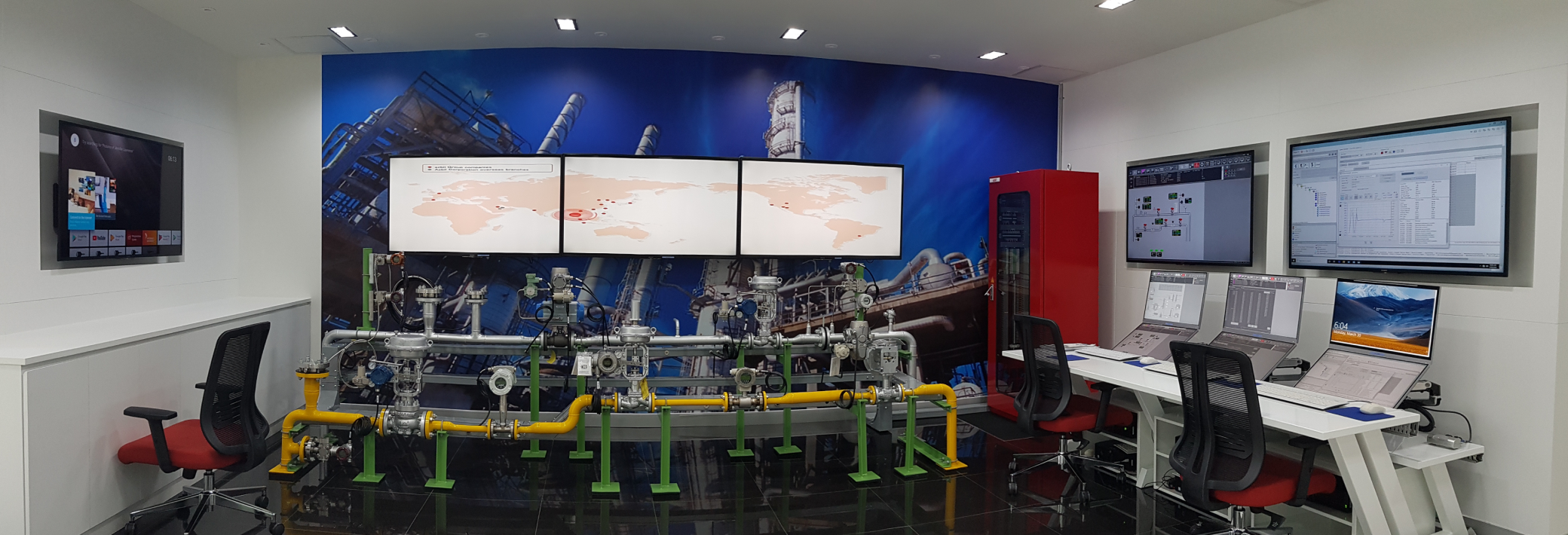
The Solution and Technology Center, which has been operating in Rayong Province since 2019, has been conducting overhauls of valves received from customers and also has a showroom where demonstrations are possible.
Meanwhile, Azbil Thailand has made a significant contribution to the Thai building market through its BA business. We introduced the energy service company (ESCO)*4 business in Thailand in 2013 and have been working to disseminate the concept of energy conservation in the country when such measures were not yet common. In the Ratchaprasong district in central Bangkok, a commercial complex lined with large shopping malls and luxury hotels, energy-saving measures have been supported, primarily through the introduction of BEMS*5. These efforts subsequently led to government-led energy conservation policies, and the azbil Group was recognized as a pioneer in promoting energy conservation in Thailand.
Playing a part in global expansion based on the new medium-term plan
Azbil offers internships to students at universities in Japan and around the world and, since 2016, has been accepting Thai students at its bases in Japan. In recent years, Azbil’s local subsidiary has begun accepting interns. Each year, it accepts two students from Chulalongkorn University, one of Thailand’s most prestigious comprehensive universities.
Azbil will continue to focus on managing this program, not only from the perspective of increasing opportunities to hire talented students from around the world, but also from the perspective of improving the management skills of azbil Group employees who manage the programs, strengthening partnerships and collaborations with overseas universities, and contributing to establishing the azbil brand in local areas.
Additionally, Azbil Thailand joined the Technology Promotion Association (Thailand-Japan) to promote its products through seminars and lectures and build a personal network with member companies, thereby increasing awareness and developing new customers.
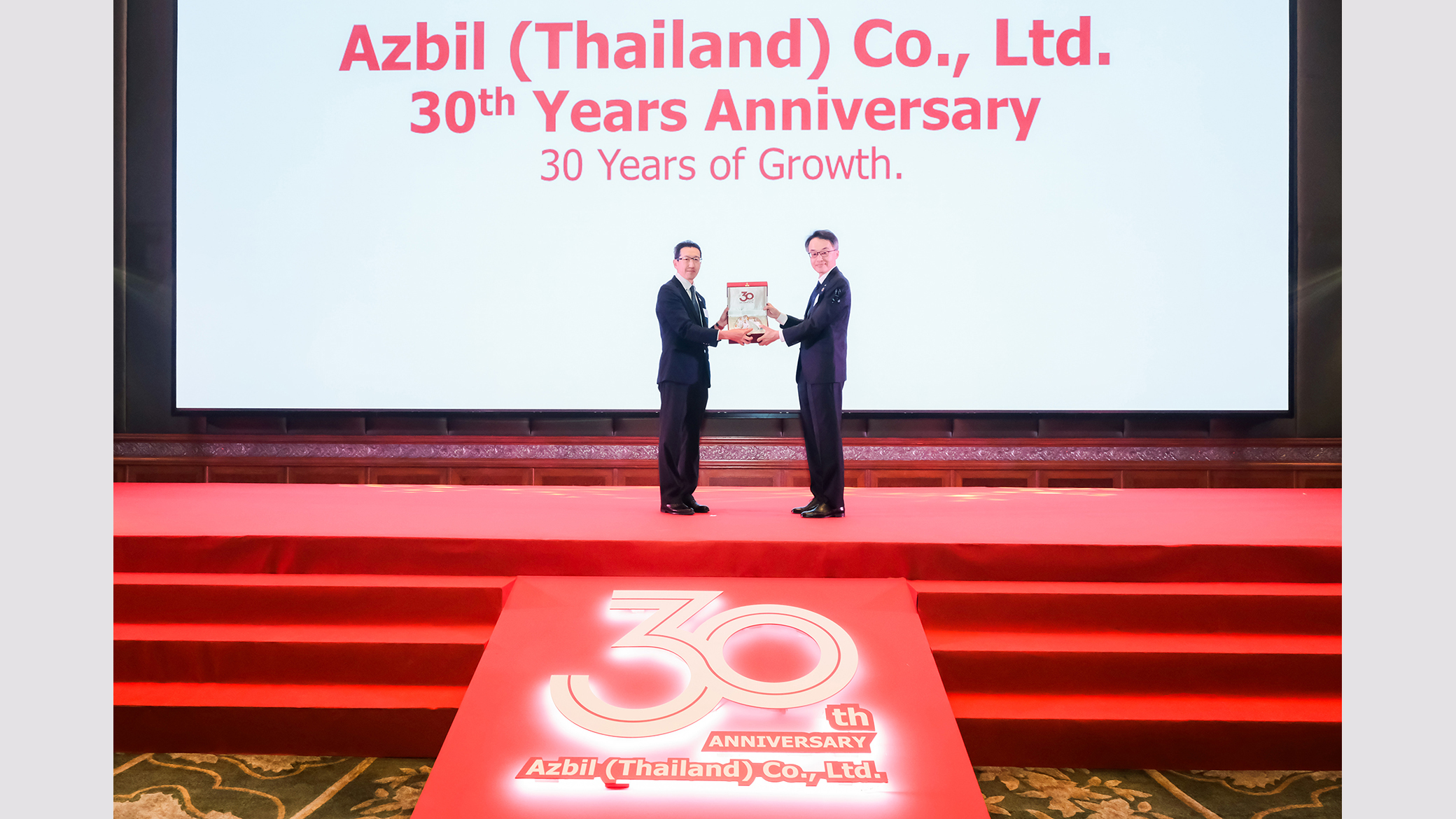
Azbil Thailand, which has been carrying out these activities, celebrates its 30th anniversary in 2025. In November of that year, it held a commemorative party to celebrate the occasion, inviting customers and related parties who have supported the company to date. It was a valuable opportunity to look back on its 30-year history and convey its gratitude to its customers and the business development rooted in the local community.
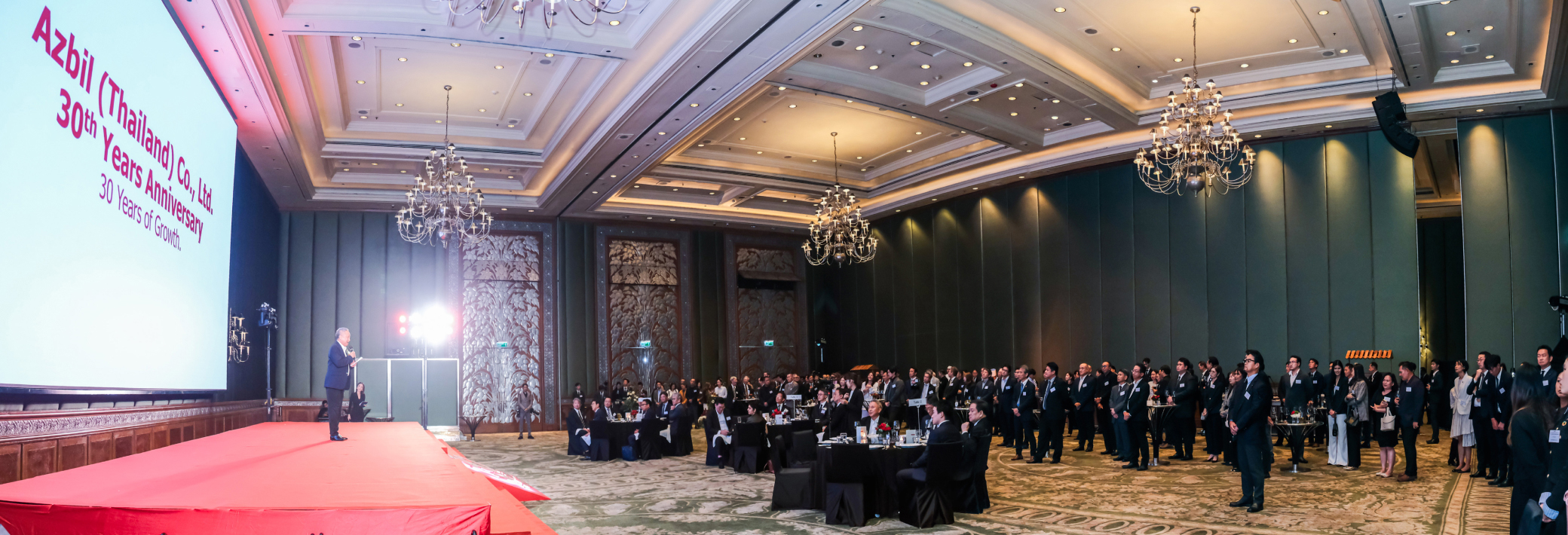
Scene from Azbil Thailand’s 30th-anniversary party held in November 2025
Azbil Thailand will continue to work to achieve further energy savings at its customers’ worksites. The company aims to respond to the demand for carbon neutrality and a sustainable society in Thailand by proposing more effective solutions.
By continuing to make these efforts and evolving them, Azbil Thailand will steadily contribute to realizing the “accelerated expansion of global business” outlined in azbil Group’s new medium-term plan for the three-year period from 2025 to 2027, announced in May 2025.
-
*1: Eastern Economic Corridor (EEC)
A special economic zone for realizing “Thailand 4.0,” a long-term vision presented by the Thai government in 2015 to advance industrial sophistication and increase value addition. It aims to attract ten key industries, including next-generation automobiles and robotics, to promote the accumulation and development of advanced industries. -
*2: Smart industrial safety
An initiative that uses digital technology, such as IoT and AI, to understand and constantly monitor the status of facilities and equipment, achieve an operational style with high labor productivity, and improve the safety and reliability of plant operations. -
*3: Distributed Control System (DCS)
A dedicated system for monitoring and controlling the manufacturing processes and production equipment of plants and factories. To achieve an even distribution of load, the DCS manages the functions of each device over a network, resulting in safety and excellent maintainability. -
*4: Energy service company (ESCO) project
The ESCO guarantees a certain level of energy savings by providing comprehensive energy-conservation services for factories and buildings. There are two types of contracts.
Guaranteed-savings contract: The facility owner bears project costs, and the energy service company guarantees energy savings.
Shared-savings contract: The energy service company bears project costs, and the customer pays a fee for energy savings and other services. -
*5: Building Energy Management System (BEMS)
A system for automating energy-efficiency monitoring and control of all energy-consuming equipment in buildings, factories, and district heating and cooling systems and optimizing the building’s overall energy use. - This article is a translation of the Japanese version published on January 20, 2026.
 Related information