



HVAC Sensor
 / HVAC Sensor
 Sensors play a critical role in maximizing the performance of heating, ventilation, and air conditioning (HVAC) systems. Accurately capturing data such as temperature, humidity, and air quality can significantly improve the precision of air conditioning control.
This article explains what HVAC sensors are, outlines the characteristics of each type, and highlights the key points to consider when selecting the right sensor.
What Is HVAC?

The term HVAC refers to the overall system used to maintain appropriate temperature, humidity, and air quality in a building.
These systems are widely implemented in various environments, such as office buildings, commercial facilities, and factories. They play a vital role in creating comfortable indoor environments while ensuring the stable operation of building systems. In addition, HVAC technologies are gaining increasing attention for their contribution to energy optimization.
Role of HVAC Sensors
In HVAC systems, various sensors are used to monitor environmental conditions in a space accurately.
The data collected are fed into the control system, where they are used to determine and adjust the system operation. The key roles of HVAC sensors are described below.

Air Conditioning Control
Heating, ventilation, and air conditioning sensors detect parameters such as indoor and outdoor temperature, humidity, and air quality, and send signals to HVAC equipment.
By adjusting heating and cooling output according to changes in room temperature, the system can maintain operation in line with set conditions.
In addition, incorporating factors such as occupancy and outdoor conditions into the control logic helps improve overall energy efficiency.
Improving Energy Efficiency
Heating, ventilation, and air conditioning sensors continuously monitor indoor temperature, humidity, occupancy, and outdoor conditions. Based on these data, HVAC operation can be optimized to improve energy efficiency.
For example, the system output can be reduced in unoccupied spaces while maintaining conditioning only where needed. This prevents excessive heating or cooling, reduces equipment load, and minimizes unnecessary energy consumption.
Maintaining Comfort
Sensors also play a crucial role in maintaining indoor comfort.
By keeping temperature and humidity within appropriate ranges, a comfortable environment can be ensured for occupants.
Additionally, monitoring carbon dioxide (CO₂) levels and air quality allows for proper timing of ventilation. Effective environmental control not only enhances comfort but also contributes to improved concentration and productivity.
Sensors Used in HVAC Systems
A wide variety of sensors are used in HVAC systems to capture environmental data, such as temperature, humidity, and air quality, accurately.
This section outlines the main types of sensors used in HVAC applications—temperature, humidity, and CO₂ sensors—along with their characteristics.
Temperature Sensors
Temperature sensors are the most fundamental components in HVAC control. They are used not only to measure room temperature but also temperatures within equipment, such as chilled and hot water systems used for air conditioning.
Different sensing methods are selected depending on the required accuracy, response time, and installation environment.
Humidity Sensors
Humidity sensors measure the amount of moisture in the air and play a key role in maintaining comfort and preventing condensation and mold.
They are also used in more advanced HVAC control, such as combined temperature–humidity control and dew point management.
Selection should be based on measurement principles, environmental resistance, and long-term stability.
Carbon Dioxide Sensors
Carbon dioxide sensors are widely used as a key indicator for indoor air quality and ventilation conditions. Since CO₂ concentration correlates with occupancy levels and ventilation effectiveness, these sensors are commonly applied in demand-controlled ventilation systems for energy savings.
Different measurement methods offer varying levels of accuracy, response time, cost, and maintenance requirements, making proper selection essential.
Key Requirements for HVAC Sensors
THeating, ventilation, and air conditioning sensors have a direct impact on air conditioning performance and energy efficiency. Therefore, it is not enough for sensors to simply measure values—they must also offer high accuracy and long-term stability.
When selecting HVAC sensors, the following factors should be carefully considered:
Long-term Stability
Heating, ventilation, and air conditioning systems operate continuously over long periods, so sensors must maintain stable measurement performance over time.
If sensor accuracy drifts due to aging, it can lead to reduced control precision and unnecessary HVAC operation.
By selecting sensors with excellent long-term stability, it is possible to reduce the frequency of calibration and replacement, thereby lowering maintenance workload and lifecycle costs.
Accuracy
Sensor accuracy directly affects the quality of HVAC control.
Even small deviations in temperature or humidity measurements can impact perceived comfort and energy consumption.
Durability
Since sensors are used over extended periods, both mechanical and electrical durability are essential.
In environments with vibration, shock, or frequent temperature fluctuations, the risk of component degradation and failure increases.
Selecting sensors designed with high durability and high-quality materials helps minimize failure risks and ensures stable operation.
Environmental Resistance
Heating, ventilation, and air conditioning sensors are exposed to a wide range of environmental conditions depending on installation location.
These may include high or low temperatures, high humidity, dust, oil mist, and corrosive gases. Sensors must be capable of withstanding such conditions.
Choosing sensors with appropriate protective structures and materials helps maintain measurement accuracy and prevent failures.
Response Time
In HVAC control, responsiveness to environmental changes is critical.
If the sensor response is slow, control actions may lag behind actual conditions, leading to reduced comfort and energy inefficiency.
This is especially important in environments with large load fluctuations, where fast-response sensors are required.
Maintainability
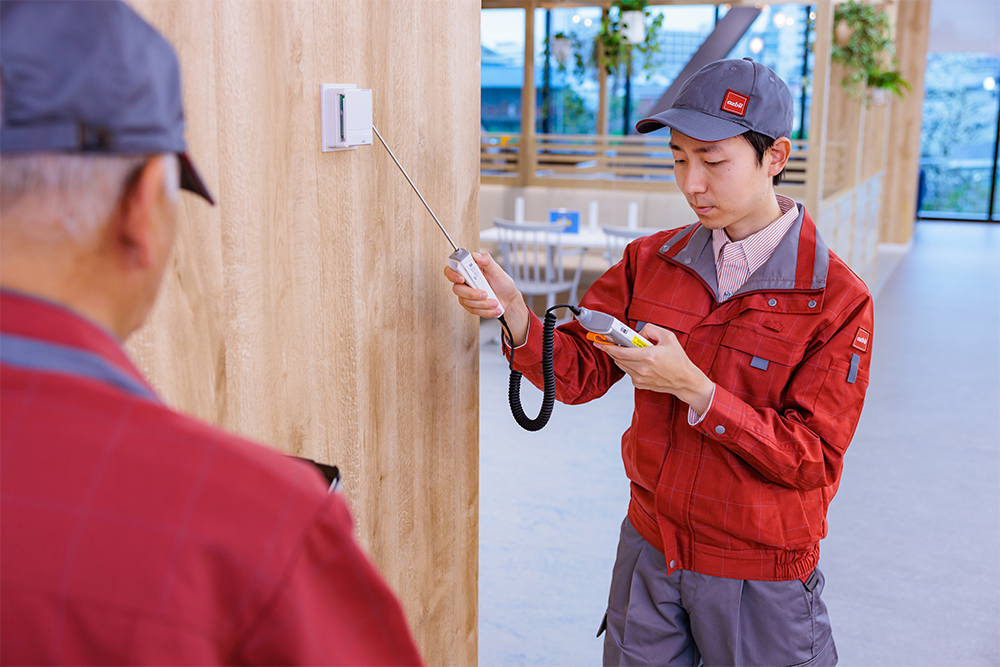
Sensors require periodic inspection, calibration, and sometimes replacement, making ease of maintenance an important selection factor.
Accessibility of installation locations, tool-free replacement designs, and ease of calibration all significantly impact maintenance efficiency.
Additionally, selecting sensors with longer calibration intervals can help reduce operational costs.
Design (Aesthetics)
In spaces such as offices, commercial facilities, and hotels, sensors can affect the visual impression of the interior, making design an important consideration.
Compact, unobtrusive designs and appearances that blend with interior aesthetics can enhance the overall value of the space.
Sensor selection should balance both functionality and design, especially in environments where people spend extended periods.
Azbil HVAC Sensors Optimized for HVAC Applications
Azbil offers a wide range of sensors designed to meet the key requirements of HVAC systems, including high accuracy, long-term stability, and reduced wiring.
Indoor Sensors
Indoor Sensors series includes indoor temperature, humidity, and combined temperature–humidity sensors, available in both wired and wireless types.
These sensors provide highly accurate measurements over a wide range, with excellent long-term stability and environmental resistance.
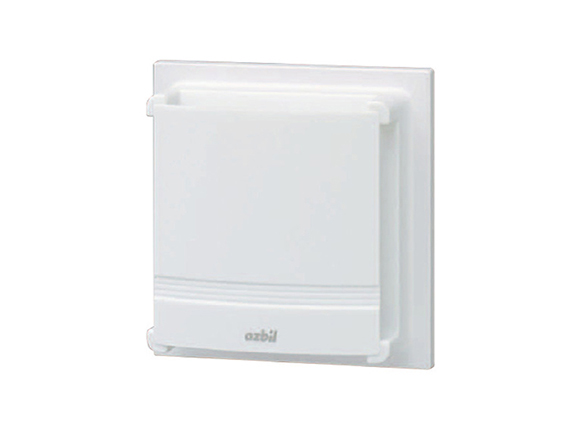
With high responsiveness and repeatability, along with a compact and lightweight design, they can be installed without compromising interior aesthetics, making them ideal for offices and commercial facilities.
Durable Temperature and Humidity Sensors
For harsh environments such as factories and outdoor installations,durable temperature and humidity sensors are suitable.
Equipped with Azbil’s proprietary FP4™ temperature and humidity element, these sensors feature drift recovery and drift detection functions.
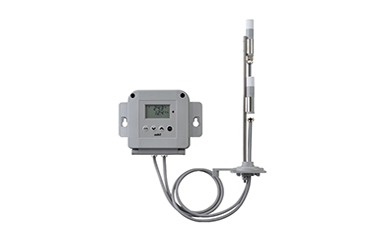
They also enable long-term stable measurement through element replacement and high-temperature self-cleaning.
Room CO2 and Temperature Sensors
Room CO2 and Temperature Sensors are essential for indoor air quality management and ventilation control.
Azbil’s indoor models use the non-dispersive infrared method for CO₂ measurement, combined with Pt100-based temperature sensing, enabling high-accuracy measurements across a wide range.
They offer excellent long-term stability and environmental resistance, along with high responsiveness and repeatability. Their slim and lightweight design also allows for unobtrusive ceiling installation.
Other Product Lineups
In addition to the above, Azbil provides a variety of sensors tailored to different applications.
These include ceiling-mounted temperature sensors, duct temperature/humidity/dew point sensors, pipe-mounted temperature sensors, radiation temperature sensors, and differential pressure/high-precision differential pressure sensors, allowing selection based on installation location and measurement targets.
Azbil also offers thermal energy meters and totalizers for managing energy flow, as well as temperature and humidity controllers designed to integrate seamlessly with sensors, contributing to improved overall HVAC system efficiency.
Summary
In this article, we have introduced the fundamentals of HVAC sensors, their types and characteristics, key selection points, and Azbil’s sensor solutions.
Azbil provides not only HVAC sensors but also a wide range of equipment and solutions that support building automation as a whole. From sensors and controllers to monitoring systems, integrated system construction is possible.
Azbil is also currently seeking distributors for these products and solutions. Please feel free to contact us for more information.