It has been four years since Azbil Corporation transitioned to having a three-committee board structure. The Nomination, Audit and Remuneration committees are all chaired by outside directors. There are liaison meetings between these three chairpersons and the president, as well as meetings solely for outside directors. All three chairpersons actively participate in dialogues with investors. Furthermore, under the new structure that took effect from the June 2025 Ordinary General Meeting of Shareholders, the Board of Directors is now chaired by an outside director, so we can more proactively incorporate supervisory perspectives into the Board’s agenda.
I believe that what makes this possible is the mutual trust that exists between the executive management and supervisory sides, as well as their close coordination maintaining a constructive tension. Both sides see that a resilient Board of Directors and a robust growth story developed by executive management are the twin pillars essential to maximizing enterprise value over the long term. What’s more, they share a common grasp of the megatrends in the environment surrounding the Company and are committed to fulfilling their respective roles so as to optimize the Company’s risk management and capitalization opportunities.
In particular, the Nomination committee is engaged in successor selection and development for tomorrow’s senior management. This is one of the key functions of corporate governance. We have objectively defined the attributes required of successors for the coming era and future business phases and have worked to enhance transparency in the process for identifying and training individuals with those attributes. And we are confident that, by setting milestones, we can ensure the steady implementation of succession planning. Moreover, to maintain continuity and consistency in oversight, we are steadily advancing Board refreshment through the planned replacement of outside directors.
Of course, there are still many challenges ahead. Various factors are at play simultaneously, giving rise to a vortex of change. I believe that, if the Company is to continue to meet the expectations of the capital markets, demonstrating speed and strength on a whole new level, both executive management and the Board of Directors as the supervisory body must achieve further transformation. We will redouble our efforts to meet the demands of the times.
Corporate Governance
Basic Approach
In order to deserve the trust of our shareholders and other stakeholders, the Company’s fundamental approach to corporate governance is not just to ensure compliance with laws and regulations and our Articles of Incorporation, but also to fulfill our social responsibilities based on corporate ethics and to contribute to society while continuously improving enterprise value through efficient and transparent management. We see this as a top management priority.
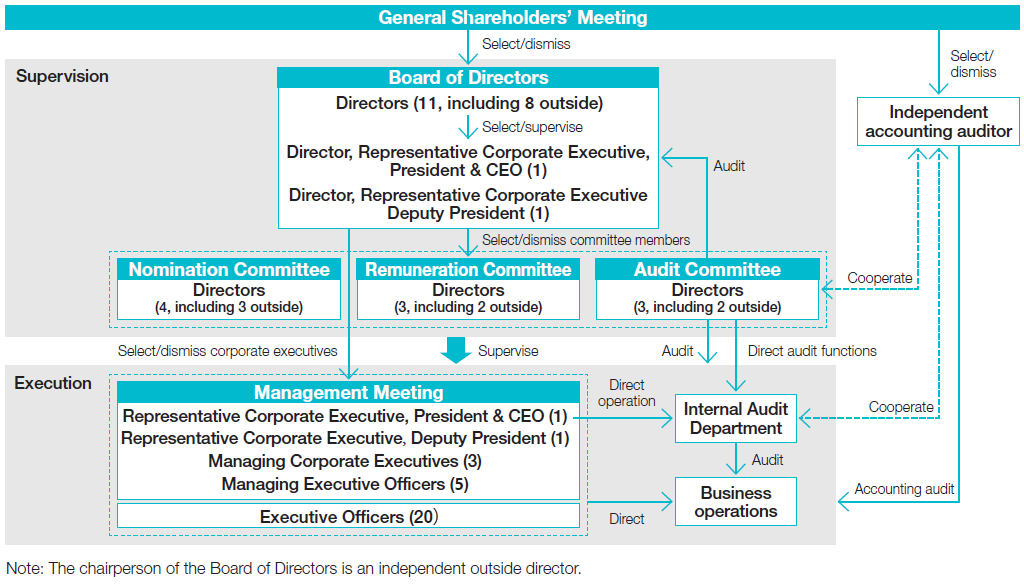
The azbil Group has established its long-term targets (to achieve by FY2030) and a medium-term plan (FY2025-FY2027), whose aim is to contribute “in-series” to a sustainable society and achieve growth through providing automation-related products and services. Guided by the Group philosophy of “human-centered automation”, we will secure our own medium- and long-term development while implementing sustainable enhancement of enterprise value. Furthermore, in May 2026, to articulate the value the azbil Group provides to society and the significance of its existence, we formulated our Purpose as “Expanding Technological Frontiers, Unlocking Human Potential.” Additionally, we have defined our vision as the concrete, ideal state and goals that the azbil Group aims to achieve ten years from now through the realization of our Purpose, and we are pursuing management aimed at realizing this vision. At the same time, we recognize that it is corporate governance which provides the foundation for such sustainable enhancement of enterprise value, and so improving corporate governance is a key issue for management. As a company with a three-committee board structure, we are therefore working to strengthen the supervisory and auditing functions of the Board of Directors, enhance the transparency and soundness of management, and clarify responsibilities for business execution.
Azbil Corporation's report on corporate governance (full text) is available here.
Corporate Governance Report revised on 24 June, 2026(PDF/865KB)
Basic Policy for Corporate Governance
(1) Ensuring the rights and equality of shareholders
In order to ensure that shareholders’ rights are substantially secured, the Company takes appropriate measures in accordance with laws and regulations, and, giving due consideration to all shareholders including foreign shareholders and minority shareholders, is promoting the development of an environment in which shareholders can exercise their rights equally and appropriately.
(2) Cooperation with stakeholders
In order to achieve sustainable growth and increase enterprise value over the medium to long term, we believe that the Company must be strongly aware of its corporate social responsibility and conduct management that is appropriate for all our stakeholders. For this purpose, we have adopted “human-centered automation” as our Group philosophy to realize safety, comfort and fulfillment in people’s lives and work, and to contribute to the global environment. To this end, we have instituted Guiding Principles for azbil Group Business and established the azbil Group Code of Conduct to provide specific guidelines for all officers and employees of the Company and the azbil Group. We aim to connect our Group philosophy, Guiding Principles, Code of Conduct, and management strategy, leading “in series” to a sustainable society, and to realize a balance between resolving social issues and achieving sustainable growth. In addition, to contribute “in series” to the achievement of a sustainable society, we recognize it is important to build relationships of trust not only with shareholders but with all stakeholders—including employees, business partners, customers, creditors, and local communities—as well as accelerate transformation through appropriate collaboration with multiple stakeholders, and grow sustainably. Based on this awareness, we have formulated and published our Multi-stakeholder Policy. At the same time, we have endorsed and published a Partnership-building Declaration, which seeks to increase added value throughout the supply chain and build relationships of co-prosperity with business partners.
You can find the Multi-stakeholder Policy and Partnership-building Declaration on our corporate website.
Multi-stakeholder Policy (Japanese only): https://www.azbil.com/jp/sustainability/reference/external_engagements/initiative/multi-stakeholder_policy.html
Partnership-building Declaration (Japanese only): https://www.azbil.com/jp/sustainability/reference/external_engagements/initiative/partnership.html
Furthermore, regarding our human rights initiatives, based on the azbil Group Basic Policy on Human Rights, we have positioned respect for human rights as one of our key management priorities and are implementing human rights due diligence within our Group and supply chains. Through our Group’s human rights due diligence, we have thoroughly examined the entire value chain of the azbil Group to identify potential human rights risks (with adverse impact), assessed their severity and likelihood of occurrence, drawn up a human rights risk map, identified as priority human rights issues those serious human rights risks that have a high likelihood of occurrence, and are implementing measures to address these risks. Additionally, we have established the azbil Group Human Rights Subcommittee to strengthen our framework for sharing challenges and promoting initiatives across the Group. Furthermore, as part of our stakeholder engagement efforts, we hold annual dialogues with experts in the fields of business and human rights who participate in human rights NGOs that are stakeholders; we utilize the insights gained from these dialogues to enhance our human rights due diligence and improve our initiatives. We also continually review human rights issues and our policies for addressing them, taking into consideration changes in the business environment and the results of stakeholder engagement. Regarding the establishment of an aid mechanism, we have set up a global hotline for consultation and reporting that is accessible to all our stakeholders, aiming to prevent adverse human rights impacts from occurring and ensure their early detection and response. Our human rights initiatives are discussed at the Management Meeting and reported to the Board of Directors.
With regard to the internal reporting system, we believe it is important to (a) encourage employees to use this system by dispelling any concerns that in so doing they might be put at a disadvantage, and (b) ensure that the information thus conveyed is used appropriately. We have therefore established a user-friendly reporting & consultation system—the CSR Hotline—which ensures that the information received is reported to the president & CEO, Audit Committee members, and outside directors with due consideration given to personal information.
(3) Ensuring appropriate information disclosure and transparency
The Company strives to disseminate information so as to ensure transparency and fairness in decision-making, thus realizing effective corporate governance. Specifically, in order to ensure that all stakeholders have a proper understanding of financial information—such as the Company’s financial position and business results—as well as non-financial information—such as management strategy, management planning, management issues, and information relating to risk and governance—we actively disclose information on a voluntary basis in addition to the information stipulated by law. The Company also discloses policies and procedures regarding the nomination and appointment of candidates for directors, as well as the selection and dismissal of senior executives, and policies for deciding on the remuneration for directors and corporate executives. We will continue to strive to increase the scope of information covered by these disclosures and ensure transparency.
In addition, we are taking appropriate measures to ensure proper audits by the independent accounting auditor: the Company provides sufficient time for audits to be conducted, arranges for the independent accounting auditor to interview the president & CEO and the officer in charge of finance on a regular basis, and conducts quarterly reporting between the independent accounting auditor, the Audit Committee, and the Internal Audit Department.
(4) Responsibilities of the Board of Directors, etc.
The basic mission of the Board of Directors is to put in place an appropriate corporate governance system and to implement this so as to achieve sustainable growth for the Company and enhance its enterprise value.
The Board Rules stipulate that basic management strategy and management plans are important items for deliberation, and following discussions that are unrestricted, robust and constructive, the Board will make appropriate decisions. Moreover, to ensure transparency and fairness in management, the Company will maintain systems for timely disclosure, internal control and risk management. At the same time, the Audit Committee, in cooperation with the Internal Audit Department, will successively provide appropriate audits and opinions on management.
The Company recognizes that independent outside directors play a key role in ensuring that the Board properly fulfills its functions and responsibilities, and thus it has appointed 8 independent outside directors with a broad range of experience in corporate management and supervision, as well as considerable expertise and knowledge. Drawing on their diverse backgrounds, these independent outside directors adopt a wide range of perspectives to fulfill their responsibilities, offering advice on improving enterprise value, supervising management, etc. As of June 24, 2026, the total number of directors is 11, with outside directors representing a majority. Board composition demonstrates ample diversity, including that of nationality and gender.
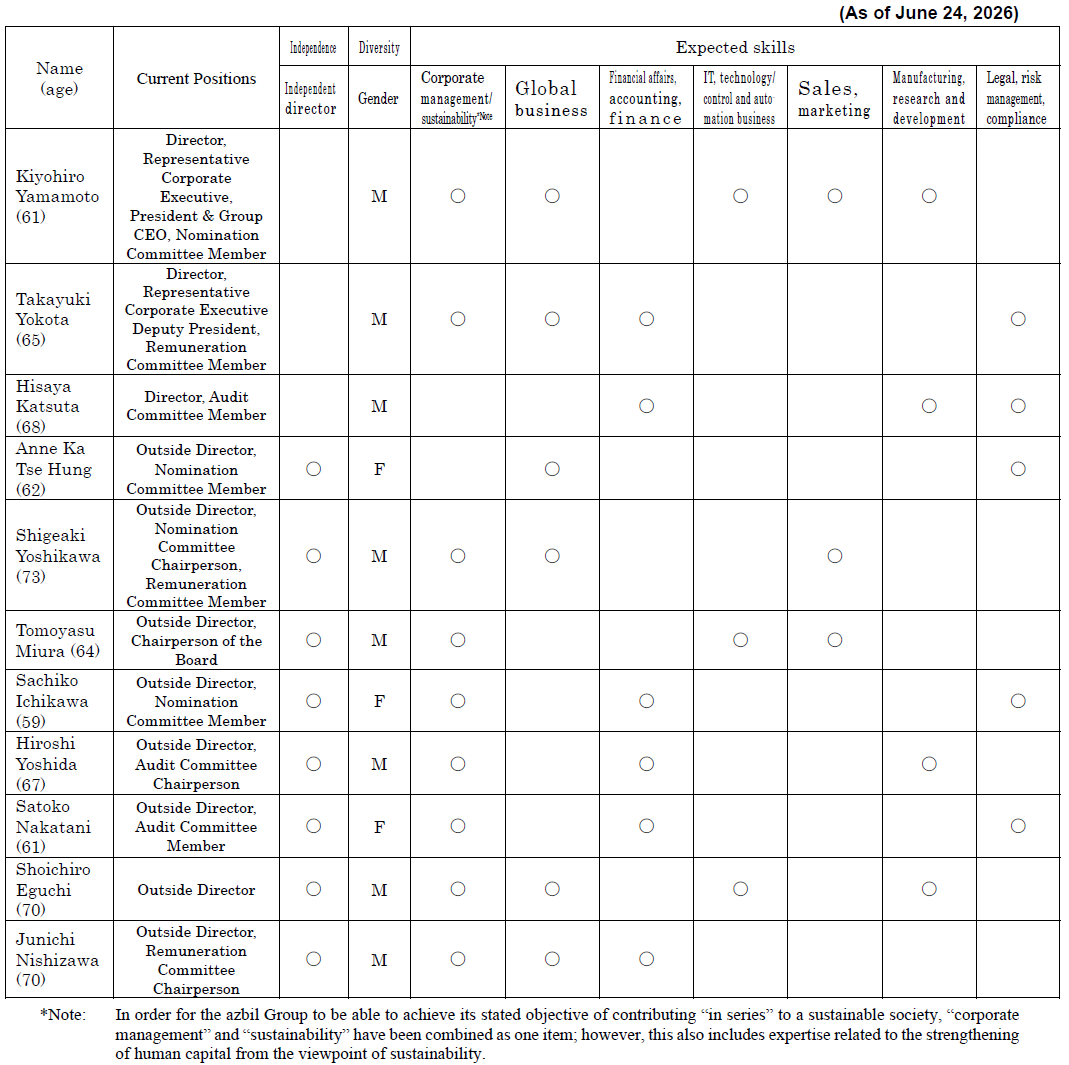
For the Board of Directors to effectively fulfill its roles, the Company believes that, in appointing directors, it is important to promote diversity, taking into consideration the balance of knowledge and experience, and also to ensure transparency and objectivity in the selection process. From the viewpoint of ensuring a sustainable increase in enterprise value, including the realization of the medium-term plan, the Company has set out what skill sets are expected of its directors and has confirmed the requisite independence, diversity, and anticipated skills of its current Board.
Regarding succession planning for the Company’s senior management, the Nomination Committee discusses the ongoing training and selection of successors, records the results of those discussions as well as the process of deliberation, and ensures that succession planning is conducted appropriately and objectively. In addition, the chairperson of the Nomination Committee, who is an independent outside director, regularly reports on the activities of the Nomination Committee to the Board of Directors. A system is in place to ensure that sufficient time and resources are allocated to the training of candidates for succession. Also, in order to prepare the next generation of senior executives, we provide training opportunities for managers to acquire the leadership skills, knowledge of management strategies, and management competences required of top management.
(5) Responsibilities of the Statutory Committees
As a company with a three-committee board structure, the Company has established three statutory committees—namely the Nomination Committee, the Audit Committee, and the Remuneration Committee—and each committee has the responsibilities listed below. In addition, each committee member is selected from among the directors by a resolution of the Board of Directors; similarly, the chairperson is selected from among the independent outside directors by a resolution of the Board. Moreover, a committee member designated by each committee reports to the Board of Directors in a timely and appropriate manner on the content of the committee deliberations and resolutions.
(Nomination Committee)
The Nomination Committee is responsible for determining proposals concerning the election and dismissal of directors to be submitted to the General Meeting of Shareholders and for deliberating on drafts concerning the appointment and removal of members of the three committees (nomination, audit and remuneration); drafts concerning the election and dismissal of corporate executives; and matters related to succession planning.
(Audit Committee)
The Audit Committee is responsible for auditing the execution of duties by corporate executives and directors; for preparing audit reports; for drawing up detailed proposals for the election, dismissal, or non-reappointment of the accounting auditor; and for promoting systematic auditing.
(Remuneration Committee)
The Remuneration Committee is responsible for determining policies related to the remuneration system for directors and corporate executives; for determining individual remuneration; and for deliberating on the establishment, revision, or abolition of remuneration systems as well as other matters related to executive remuneration.
(6) Dialogue with shareholders
In order to meet the requirements for corporate accountability while contributing to sustainable growth and the enhancement of enterprise value over the medium to long term, the Company is working to develop and implement a system for promoting constructive dialogue with shareholders and investors.
(7) Overview of corporate governance system and reasons for adopting the system
To ensure its own medium- to long-term development, respond to the trust of all its stakeholders including its shareholders, and consistently increase enterprise value, the azbil Group sets as a management priority the enhancement of its foundational corporate governance. Measures have included strengthening the supervisory and auditing functions of the Board of Directors, improving management transparency and soundness, and clarifying the structure of responsibility for the execution of duties.
As a company with a three-committee board structure, three statutory committees—the Nomination Committee, the Audit Committee, and the Remuneration Committee—have been established, each having a majority of independent outside directors and being chaired by an independent outside director. In addition, by substantially transferring business execution authority from the Board of Directors to corporate executives with clear legal responsibilities, we are clearly separating supervisory and execution functions to ensure a business execution system based on flexible and efficient decision-making, while enhancing the objective supervision of management.
Furthermore, as a company with a three-committee board structure, to ensure the effectiveness of monitoring by the Board of Directors, we have established a forum for providing information to directors and exchanging opinions with corporate executives in the form of a Liaison Meeting for Directors and Corporate Executives, and, in addition, opinion-exchange meetings are held regularly among outside directors. At the same time, we are continuing the system by which executive officers are charged with business execution, aiming to enhance the quality and speed of decision-making.
The Board of Directors is convened monthly in principle, to discuss and consider legal issues and other important managerial matters as the highest decision-making body for management, to set a strategic course for the organization, and to exercise appropriate supervision over execution in order to reflect the opinions of stakeholders. In business execution, the Management Meeting, which corporate executives and executive officers with titles attend, has been established to serve as an executive-level advisory body to assist the president & Group CEO in making decisions; in attendance, to ensure the effectiveness of monitoring, is the full-time Audit Committee member. The Management Meeting is held twice a month in principle as part of ongoing initiatives to strengthen business operations through prompt decision-making and rigorous execution.
As of June 24, 2026, the Company has appointed a total of 11 directors, including 3 who have accumulated experience in the Company’s business, management and audits (Kiyohiro Yamamoto, Takayuki Yokota, and Hisaya Katsuta), as well as 8 who are independent outside directors having independence, broad experience, a wealth of expertise and knowledge, and rich diversity, including that of nationality and gender (Anne Ka Tse Hung, Shigeaki Yoshikawa, Tomoyasu Miura, Sachiko Ichikawa, Hiroshi Yoshida, Satoko Nakatani, Shoichiro Eguchi and Junichi Nishizawa). Independent outside directors now form the majority of the Board of Directors. Furthermore, the Board of Directors is chaired by an independent outside director. In addition to working diligently to contribute to enhancement of the Company’s enterprise value through appropriate oversight and advice during the decision-making process at Board of Directors meetings, these independent outside directors regularly exchange opinions with corporate executives through the Liaison Meeting for Directors and Corporate Executives and other opportunities.
(8) Status of Activities of the Board of Directors and each committee
<Status of Activities of the Board of Directors>
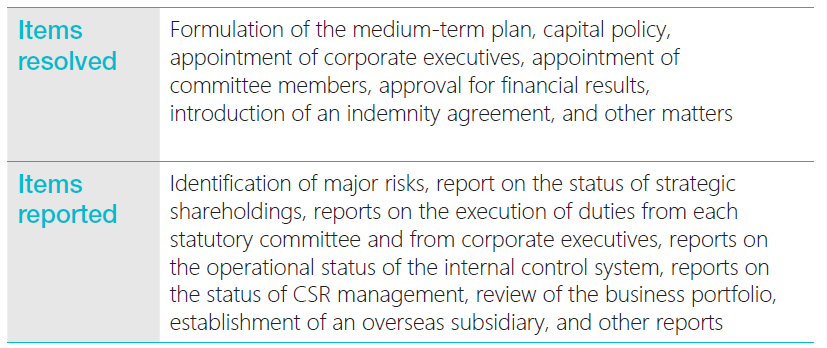
In FY2025, the Board of Directors met a total of 13 times. The 10 directors attended all of the meetings*. Major items discussed at the Board of Directors meetings are as follows.
* Because Satoko Nakatani was elected at the 103rd Ordinary General Meeting of Shareholders held on June 25, 2025, her attendance only applies to Board of Directors meetings held after her appointment.
<Status of Activities of the Nomination Committee, the Audit Committee, and the Remuneration Committee>
Nomination Committee
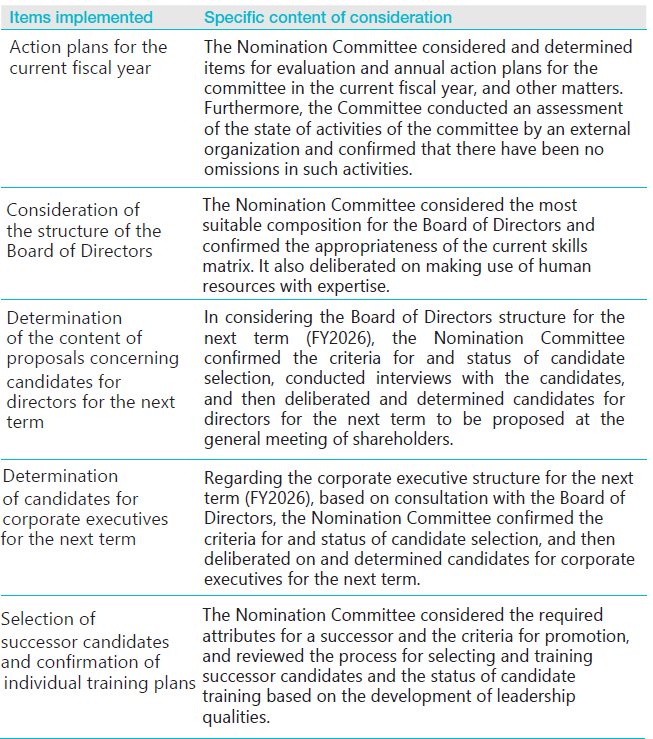
As of March 31, 2026, the Nomination Committee is comprised of 4 members, with Shigeaki Yoshikawa (Independent Outside Director) serving as the committee chairperson, and Anne Ka Tse Hung (Independent Outside Director), Sachiko Ichikawa (Independent Outside Director) and Kiyohiro Yamamoto (Director, President & Group CEO) serving as committee members; independent outside directors comprise a majority of the committee*. In FY2025, the Nomination Committee met 11 times, and the 4 members of the committee attended all of the meetings. Items implemented and specific items for consideration by the Nomination Committee were as follows.
* There was no change in the composition of the Nomination Committee after the Ordinary General Meeting of Shareholders and the Board of Directors meeting on June 24, 2026.
Audit Committee
As of March 31, 2026, the Audit Committee is comprised of 3 members, with Hiroshi Yoshida (Independent Outside Director) serving as the committee chairperson, and Satoko Nakatani (Independent Outside Director) and Hisaya Katsuta (Non-executive Inside Director) serving as committee members; independent outside directors comprise a majority of the committee*1. Two independent outside directors and 1 non-executive inside director who is well acquainted with the Company’s businesses formulate audit plans together with the Internal Audit Department and conduct multifaceted auditing activities; the inside committee member serves on a full-time basis to enhance the effectiveness of audits by the Audit Committee. The Audit Committee chairperson Hiroshi Yoshida has experience as the person responsible for the creation of financial statements as the officer in charge of accounting and finance at a chemical manufacturer listed on the Tokyo Stock Exchange Prime Market. The Audit Committee member Satoko Nakatani has served as a partner at an accounting firm, engaging in the auditing of a wide range of industries, primarily large manufacturing companies, and has experience in handling advisory services for various accounting systems and other matters as a certified public accountant. Both of them thus have a wealth of knowledge concerning financial affairs and accounting. Furthermore, the Company established an Audit Committee Office, an organization dedicated to assisting the Audit Committee in its duties, with 3 staff members assigned to assist the Audit Committee in the execution of its duties.
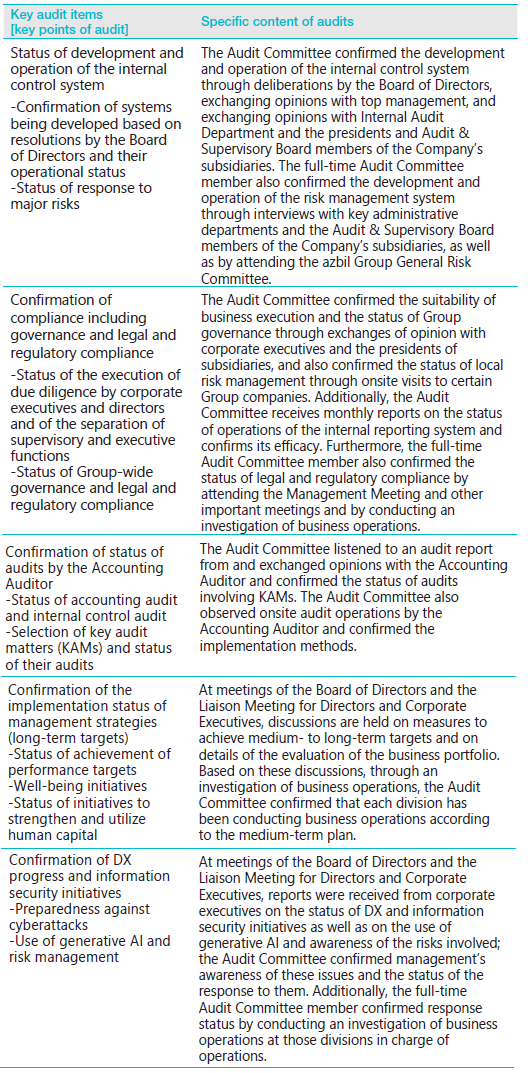
The Audit Committee convenes in principle once a month and holds ad-hoc meetings, as necessary. In FY2025, it convened a total of 13 times and the 3 Audit Committee members participated in all of the meetings*2. The key audit items, points of note concerning audits, and specific audit details of the Audit Committee in FY2025 were as follows.
*1 There was no change in the composition of the Audit Committee after the Ordinary General Meeting of Shareholders and the Board of Directors meeting on June 24, 2026.
*2 Because Satoko Nakatani was elected at the 103rd Ordinary General Meeting of Shareholders held on June 25, 2025, her attendance only applies to committee meetings held after her appointment.
The following are details of (1) coordination with the Internal Audit Department, (2) coordination with the independent accounting auditor, and (3) the Audit Committee’s evaluation of the audit firm.
(1) Coordination with the Internal Audit Department
In formulating the internal audit plan for the fiscal year, the Audit Committee closely coordinated with the Internal Audit Department. The Internal Audit Department head also attended Audit Committee meetings to share information and exchange opinions on the progress of both the Audit Committee audit and the internal audit. Furthermore, we are working to promote organizational audits and further strengthen our internal audit system.
(2) Coordination with the independent accounting auditor
All members of the Audit Committee listened to an audit report by the independent accounting auditor, with whom they exchanged opinions; this enabled them to confirm the status of the accounting audit and the internal audit. Based on the evaluation criteria for accounting auditors established by the Audit Committee, we have evaluated the appropriateness of audits by the independent accounting auditor, the independence of the independent accounting auditor, and the quality of the audits. In addition to attending audits conducted by the independent accounting auditor, we also took into account the results of evaluations of the independent accounting auditor by the Accounting Department, Internal Control Department, and Internal Audit Department.
Moreover, regarding non-assurance services to be performed for the Company and its subsidiaries by the independent accounting auditor and network firms, the Audit Committee gave preapproval for such services after evaluating their degree of independence, referring to information provided by the independent accounting auditor, and checking with the relevant internal departments as appropriate.
In addition, throughout the fiscal year the Audit Committee conducted explanatory hearings on the progress of examination of items and content of key audit matters (KAMs), as well as the overall status of the audit. Furthermore, in preparation for the voluntary adoption of IFRS due to start in FY2026, in FY2025, we exchanged opinions on the status of preparations for parallel disclosure and related matters.
(3) The Audit Committee’s evaluation of the audit firm
The Audit Committee has established criteria for evaluation of the independent accounting auditor under three headings: (1) professional competence; (2) audit quality control system and independence; and (3) audit plan, communication, and audit activities. The Committee evaluated the accounting audits by listening to regular audit/review reports from the independent accounting auditor, listening to explanations of the independent accounting auditor’s quality control system, witnessing the independent accounting auditor’s audits, and gathering information on the independent accounting auditor from the Accounting Department and Internal Audit Department.
Remuneration Committee
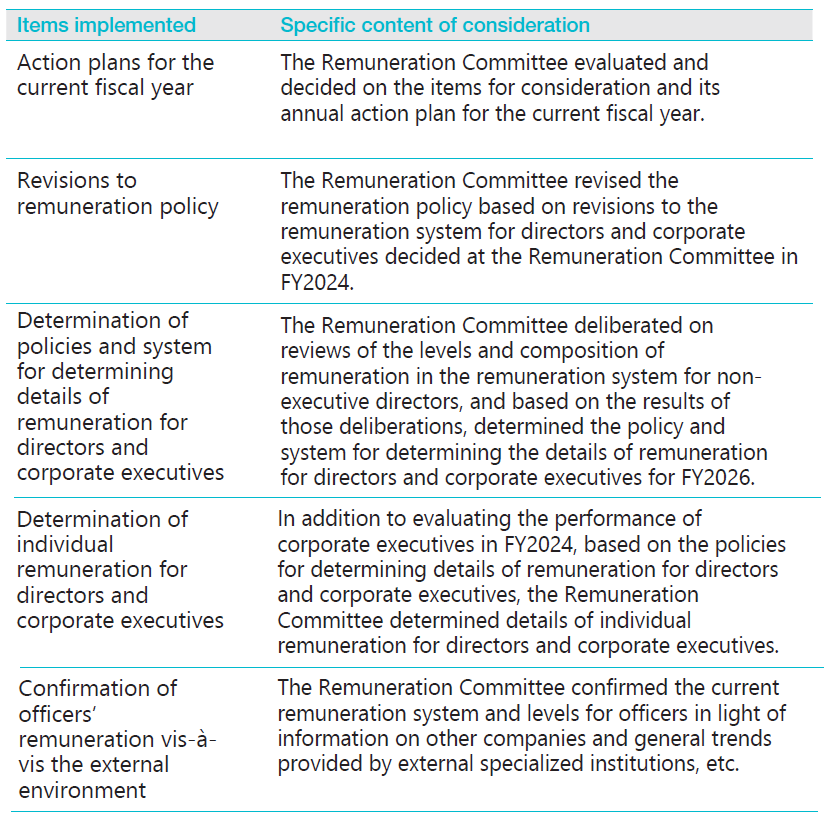
As of March 31, 2026, the Remuneration Committee is comprised of 3 members, with Mitsuhiro Nagahama (Independent Outside Director) serving as the committee chairperson, and Shigeaki Yoshikawa (Independent Outside Director) and Takayuki Yokota (Director, Representative Corporate Executive, Deputy President) serving as committee members; independent outside directors comprise a majority of the Committee*1. In FY2025, the Remuneration Committee met 10 times and the 3 Remuneration Committee members attended all of the meetings*2. Items implemented and specific items for consideration by the Remuneration Committee were as follows.
*1 As of the Ordinary General Meeting of Shareholders and the Board of Directors meeting on June 24, 2026, Junichi Nishizawa (Independent Outside Director) was appointed as the committee chairperson, and Shigeaki Yoshikawa (Independent Outside Director) and Takayuki Yokota (Director, Representative Corporate Executive, Deputy President) were appointed as committee members.
*2 Because Shigeaki Yoshikawa was appointed as a member of the Remuneration Committee by the Board of Directors meeting held after the 103rd Ordinary General Meeting of Shareholders on June 25, 2025, his attendance only applies to committee meetings held after his appointment.
(9) Nomination and appointment of director candidates, and election/dismissal of senior executives
a. Directors
In terms of basic qualifications, a candidate for director is to be a person with excellent character and insight who contributes to the growth of the Company and the Group as a whole and helps to enhance enterprise value. When nominating and electing candidates for director, the Nomination Committee also assesses the skills matrix and composition of the current committee, comprehensively taking into consideration diversity of the Board as a whole (nationality, gender, etc.)
b. The CEO and other senior executives
The appointment of the CEO and other senior executives (president & CEO, deputy president, and corporate executives) is decided by the Board of Directors after deliberation by the Nomination Committee, based on appointment criteria and the desired composition of the management structure.
Appointment criteria
As the basic requirements, senior executives must have a full understanding of the Group philosophy, deep knowledge of corporate management, wide-ranging experience both inside and outside Japan and a high level of insight into corporate governance, CSR, and compliance, as well as the ability to lead the entire Group and guide it to sustainable growth.
Dismissal criteria
Concerning dismissal of senior executives, the candidate for dismissal undergoes a fair and rigorous process of examination and deliberation by the Nomination Committee. If the committee judges that the dismissal is appropriate, it is sent to the Board of Directors for approval.
Reasons for proposing dismissal include serious business problems arising from a violation of the law or the Articles of Incorporation, circumstances that make it difficult for the person to perform and continue in the job, and a reason for retirement that is stipulated by law. In deliberating the dismissal of the president & CEO, the Nomination Committee will also conduct appropriate deliberations, taking into consideration declining financial results and other such quantitative data.
Corporate Governance Framework (As of June 24, 2026)
Overall Balance and Diversity of the Board of Directors
In a rapidly changing business environment, we believe that the Company needs a Board of Directors that offers diversity and provides a good overall balance of knowledge and experience that will contribute to the enhancement of enterprise value over the medium to long term. Based on this fundamental principle, as of June 24, 2026, the Board of Directors consists of 3 directors with executive experience in the Company’s business, audit and management, and 8 independent outside directors with wide-ranging experience, extensive expertise and professional knowledge.
Of the 11 directors, 3 are women (one of whom is a foreign national). Also, we have established the skill sets expected of the directors from the viewpoint of sustainable increase in enterprise value, including the realization of the Company’s medium-term plan, and we have confirmed the independence, diversity, and anticipated skills of the entire current Board of Directors.
Skills expected of directors (skills matrix)
Improving the Effectiveness of the Board of Directors
We believe that, for sustained enhancement of enterprise value, even in a rapidly changing business environment, it is essential that the Board of Directors sets a strategic course appropriately, fulfills its management oversight role, and supports the management team in making decisions that are prompt and decisive. For this reason, through conducting objective and constructive deliberations, the Company’s Board of Directors decides on such matters as management strategy, supervises their execution, and strives to enhance enterprise value over the medium to long term. It is to enhance these roles and responsibilities on a continuous basis that a survey is carried out every year to evaluate the effectiveness of the Board of Directors, to identify issues and areas for improvement, and to indicate practical ways in which such improvements might be made. In FY2025, to further enhance the objectivity and transparency of the evaluation of the Board’s effectiveness, as in FY2024 we commissioned an independent agency to conduct an effectiveness evaluation through an anonymous survey of all directors; this included a comparative analysis using results from other companies.
In conducting this survey, it was recognized that, to further enhance the Board’s effectiveness, it was important to deepen discussions on key management issues, to improve monitoring of medium-term plan progress and risk management, to promote dialogue with shareholders and investors, and additionally to reaffirm the roles of directors in a company with a three-committee board structure, advancing discussions on reviewing the Group’s overall business portfolio, and further improving the operation of the Board of Directors. Based on this awareness, we sought the opinions and assessments of all the directors on the following survey items: (1) the role and composition of the Board of Directors; (2) the operation of the Board of Directors; (3) management plans and strategies; (4) internal controls and risk management; (5) performance, support systems, and training; (6) dialogue with shareholders and investors; and (7) operations of the Nomination Committee, the Audit Committee, and the Remuneration Committee. Based on the responses, the Board of Directors held constructive discussions to reach a shared understanding of its current effectiveness and a recognition of the issues faced, while deliberating on how these might be addressed in future.
The survey results for FY2025 indicate that our Board of Directors—as the supervisory body of a company with a three-committee board structure—is of an appropriate size and composition, and is generally fulfilling its supervisory functions appropriately; that active and open discussions are taking place at Board meetings, led by the chairperson (an outside director), after ensuring there is sufficient deliberation time through the use of advance briefings on agenda items; and that there is a shared understanding of the Board’s role in light of the ideal shape of corporate governance. The results confirmed that the outside directors’ understanding of the Company’s business is being enhanced through a training program; that—thanks to the Liaison Meeting for Directors and Corporate Executives, off-site meetings, etc.—there is sufficient communication between directors and corporate executives; that, through reviews of the progress of the medium-term plan, the Board of Directors is functioning as a forum for substantial discussion about important management issues; and that progress has been made with board refreshment and in deepening dialogue through private meetings with shareholders and investors. It was also established that the deliberation topics of the three statutory committees for nomination, audit, and remuneration are appropriate, and that the overall effectiveness of the Board of Directors is adequately ensured.
Nevertheless, in acknowledgement of observations made that the Board of Directors is expected to further deepen its discussions and strengthen its functions—specifically regarding oversight of the Group’s overall business portfolio; the allocation of medium- to long-term management resources, including human capital and intellectual property; internal controls and risk management (including subsidiaries and overseas sites); and the composition and role of the Audit Committee—the Board will focus in FY2026 on strengthening its role as a supervisory body, further deepening discussions on management strategy and the business portfolio, and strengthening Group governance.
In order to achieve sustainable growth and increase enterprise value over the medium to long term, the Company will take steps to achieve a higher evaluation of the effectiveness of the Board of Directors and will disclose the status of these initiatives as appropriate.
Executive Compensation
As a company with a three-committee board structure, the Company’s Remuneration Committee, which is chaired by and composed of a majority of independent outside directors, sets policy on the determination of the individual remuneration of directors and corporate executives.
Remuneration Policy of Azbil Corporation
Guided by the azbil Group philosophy of “human-centered automation,” Azbil Corporation (“the Company”) aims, through business expansion, to continuously enhance enterprise value by making contributions that lead “in series” to a sustainable society, endeavoring to realize the well-being of society as well as Group employees, while building relationships of trust with all stakeholders.
With regard to our executive remuneration system, in order to add impetus to the realization of our long-term targets (to achieve by FY2030) and the medium-term plan (FY2025-FY2027), we will further increase the corporate executives’ awareness of the need to contribute to enhancing enterprise value and their motivation to maximize shareholder value, as well as improving our competitiveness when it comes to attracting, for management, the highly skilled human resources needed to realize our goals, while also ensuring that directors who are not responsible for business execution can share value with our shareholders. With this system, we will promote initiatives to contribute “in series” to a sustainable society.
The azbil Group philosophy
The azbil Group philosophy is to realize safety, comfort and fulfillment in people’s lives and contribute to global environmental preservation through “human-centered automation.” To achieve this
- We create value together with customers at their site.
- We pursue our unique value based on the idea of “human-centered.”
- We think towards the future and act progressively.
Basic policy regarding executive remuneration
Aiming to realize the Group philosophy, we have adopted the following basic policy for the remuneration of Company officers to motivate them not only for short-term performance but also to achieve medium- to long-term performance goals and to enhance enterprise value.
- Taking into consideration the nature of our business, remuneration should encourage awareness of the necessity to enhance enterprise value from a medium- to long-term perspective and further promote value sharing with our shareholders.
- Remuneration should help to secure talented management personnel to realize the Company’s management philosophy and achieve the medium- to long-term performance goals.
- The remuneration system should be highly independent and objective, and should enable us to fulfill our duty of accountability to stakeholders.
Remuneration levels
Remuneration levels for the Company officers (corporate executives and directors) are set by resolution of the Remuneration Committee after it has verified their appropriateness using data supplied by an external specialist agency. Also, the Committee reviews remuneration levels as necessary in response to changes in the external environment.
Remuneration structure
The remuneration structure for corporate executives (including those concurrently serving as directors; similarly hereinafter) is based on their roles and responsibilities, and consists of basic remuneration, which is a fixed monthly amount; bonuses, which are short-term incentives; and stock-based compensation, which is a medium- to long-term incentive. In order to ensure a remuneration structure that not only motivates officers to achieve the medium- and long-term performance goals and enhance enterprise value, but also leads to increased competitiveness for attracting highly skilled human resources for management, the incentive component of remuneration has been set at a high level, so that the combined remuneration for the president & CEO has the following structure: basic remuneration 1/3, bonus (base amount) 1/3, stock-based compensation (base amount) 1/3. The remuneration structure for other corporate executives is also determined in line with this, taking into consideration their expected roles and responsibilities. The remuneration for directors (not including those concurrently serving as corporate executives; similarly hereinafter) consists of basic remuneration and stock-based compensation.
- Corporate executives
(1) Basic remuneration
- Basic remuneration is paid as fixed monthly monetary compensation based on the position of the officer.
(2) Bonus
- A bonus is paid as performance-linked monetary remuneration that takes into consideration company performance and non-financial indicators for the single fiscal year.
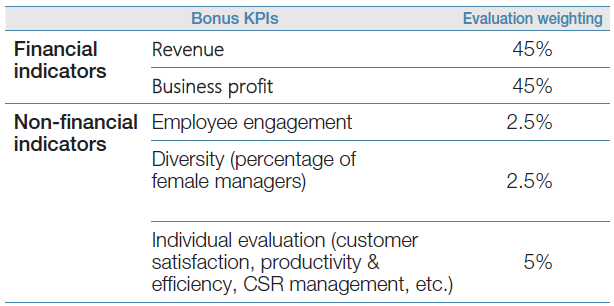
- As regards financial indicators, to improve enterprise value over the medium to long term, we use revenue and business profit, which are the Company’s main management indices, as key performance indicators (KPIs). The amount of the bonus will fluctuate according to the degree by which these targets have been achieved, while also taking into consideration non-financial indicators.
- There are three non-financial indicators: employee engagement and diversity, which assess contributions toward achieving the essential goals of the azbil Group for the SDGs; and an individual evaluation, which assesses the handling of those management issues and measures that are the particular responsibility of the corporate executive as well as how much they have contributed. Based on the degree of achievement for each of these items, the Remuneration Committee determines the amount of remuneration.
- Taking into account both financial and non-financial indicators, the final amount paid as a bonus will vary between 0% and 200%.
- Remuneration is designed so that the higher the officer’s position, the higher the weighting of financial indicators. As an example, the KPIs and their respective evaluation weightings for the president & CEO are as follows.
(3) Stock-based compensation
- In principle, stock-based compensation is paid to the corporate executive following retirement from the current position, with the aim of continuous enhancement of enterprise value while sharing value with shareholders.
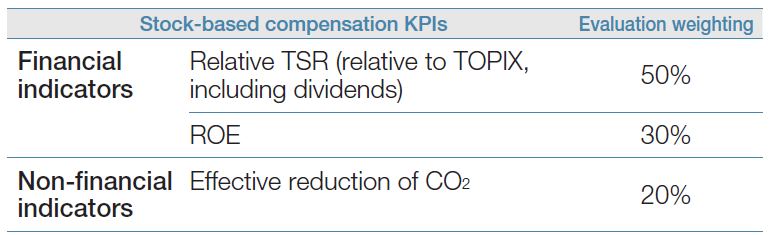
- A base amount for stock-based compensation is set for each position. Of this, 50% is performance-linked and 50% is not.
- As regards the performance-linked component, the evaluation is based on indicators aligned with the medium-term plan that are tracked over the same period (3 years) as the plan; this is designed to increase the incentive. As financial indicators we use relative total shareholder return (TSR)—an indicator that evaluates our TSR relative to the Tokyo Price Index (TOPIX) of the Tokyo Stock Exchange—and return on equity (ROE) to promote value sharing with shareholders. As a non-financial indicator, we use effective CO2 reduction at customers’ sites, which is one of the essential goals of the azbil Group for the SDGs. The individual’s stock-based compensation (ranging from 0% to 150%, depending on performance) is determined by the extent to which these targets have been achieved in the final year of the medium-term plan, using the specified weightings (see below).
- As a way to further encourage value sharing with shareholders, the non-performance-linked component is paid as stock-based compensation with vesting of a fixed number of shares.
- Stock-based compensation is paid through a trust-type stock compensation plan. Under this plan, points corresponding to an officer’s position are awarded annually, and Company shares equivalent to the number of points accumulated are transferred from the trust to the plan-eligible person following retirement from the current position. In addition, for non-residents of Japan, the Company plans to pay in cash in an amount equivalent to the stock-based compensation.
- Directors
(1) Basic remuneration
- Basic remuneration is paid as fixed monthly monetary compensation based on the responsibilities of the position.
(2) Stock-based compensation
- In principle, stock-based compensation is paid to the director following retirement from the current position, with the aim of continuously enhancing enterprise value while sharing value with shareholders.
- A base amount of stock-based compensation is determined, which is entirely non-performance-linked.
- Stock-based compensation is paid through a trust-type stock compensation plan. Under this plan, a certain number of points are awarded annually to those eligible, and Company shares equivalent to the number of points accumulated are transferred from the trust to the plan-eligible person following retirement from the current position. In addition, for non-residents of Japan, the Company plans to pay in cash in an amount equivalent to stock-based compensation.
Process for determining remuneration
- The Remuneration Committee determines the remuneration of directors and corporate executives. The majority of the members of the Remuneration Committee, including the chairperson, are outside directors, a structure that ensures objectivity and transparency. Any additional information necessary for members’ deliberations is sought from external specialist organizations.
- The Remuneration Committee has the authority to determine the details of remuneration for individual directors and corporate executives. It arrives at evaluation decisions based primarily on (1) the policy governing remuneration details for individual directors and corporate executives; (2) the details of remuneration for individual directors and corporate executives; and (3) in the case of corporate executives, the degree of achievement of both company-wide performance targets and the individual targets set for each corporate executive for the purpose of determining performance-based remuneration.
- In the event of a substantial change in the external environment of the Company, the Remuneration Committee, after carefully deliberating on the appropriateness of the target values and calculation methods used for determining performance-linked remuneration, may take exceptional measures.
Forfeiture and return of remuneration (malus and clawback)
- If the financial results for a previous fiscal year are revised retrospectively, or if serious misconduct or a serious violation has occurred, the Company can deny the officer(s) responsible the incentive component of remuneration (malus), and may demand the return of the compensation already paid to them (clawback). The compensation subject to such malus or clawback may include, in whole or in part, bonuses already paid or yet to be paid, points accrued under the stock-based compensation plan prior to the transfer of Company shares, and Company shares that have already been transferred to the officer(s) in question.
Disclosure policy
- In accordance with our disclosure policy and applicable laws and regulations, details of the executive remuneration system are compiled and disclosed promptly and appropriately through the annual Securities Report, reference materials for the General Meeting of Shareholders, the Business Report, the Corporate Governance Report, the company website, etc. The Company also implements a policy of active engagement with shareholders and investors.
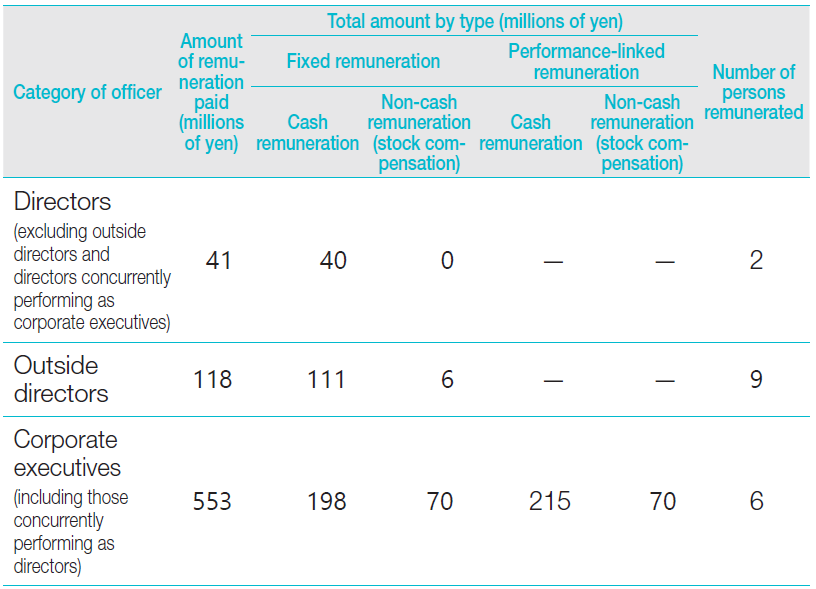
Total amount of remuneration for officers in FY2025
Contribution of Outside Directors
In addition to the requirements for independent officers stipulated by the Tokyo Stock Exchange, we follow criteria for independence that we have formulated when appointing outside officers as prescribed by the Companies Act. Candidates deemed capable of providing constructive suggestions and accurate observations and advice concerning the company’s business and the improvement of enterprise value in the medium and long terms are appointed as outside directors. Our outside directors, from their diverse perspectives, are active in asking questions and giving suggestions at Board of Directors meetings, thereby contributing to sustainable corporate growth and the enhancement of enterprise value over the medium and long terms.
Reasons for Appointing Outside Directors and Their Attendance Record in FY2025
Anne Ka Tse Hung
She worked at an international law office as a partner attorney, and supported the conclusion of agreements for the international transactions of Japanese companies, in addition to overseas corporate matters. As such, she is familiar with Japanese business customs, and possesses knowledge in the industry to which the Company belongs. She assumed the post of outside director of the Company in 2020, and she draws on her expert knowledge of international business not only to supervise business execution, but also to proactively offer opinions at the Board of Directors meetings based on her global perspective, advising on such topics as a business promotion system targeting international business growth and her approach to investment for medium- and long-term growth from a perspective based on her area of expertise. In these ways, she fulfills such appropriate roles as supervising and giving advice on business execution.
Attendance record : Board of Directors meetings 13 of 13
Shigeaki Yoshikawa
He has held key positions in a general trading company with global operations, and has broad knowledge and abundant experience regarding overseas business development and business portfolio strategies, as well as experience in corporate management, etc. at a think-tank consulting firm. He assumed the post of outside director of the Company in 2022, and—based on his extensive experience and insight into overseas business, as well as his knowledge of marketing and sales—he has proactively offered his opinions at the Board of Directors meetings regarding the Company’s international business strategies, approach to business strategies for medium- to long-term growth and human resource development from a perspective based on his area of expertise. In these ways, he fulfills such appropriate roles as supervising and giving advice on business execution.
Attendance record : Board of Directors meetings 13 of 13
Tomoyasu Miura
He has held key positions at a think-tank consulting firm and possesses knowledge and experience in a wide range of fields, such as IT, technology innovation, and new business creation, as well as abundant experience in the development of management human resources at a public interest incorporated foundation. He assumed the post of outside director of the Company in 2022, and has proactively offered his opinions at the Board of Directors meetings on business strategies for the Company’s medium- to long-term growth, and human resource development, based on his abundant knowledge of the IT and technology domains, his experience of new business creation, and his experience of human resource development from a perspective based on his area of expertise. In these ways, he fulfills such appropriate roles as supervising and giving advice on business execution.
Attendance record : Board of Directors meetings 13 of 13
Sachiko Ichikawa
She has a global perspective, extensive experience, broad knowledge and expertise as an attorney (in Japan and in New York State, U.S.A.) and as a U.S. certified public accountant. Moreover, she has served as an outside officer of manufacturing-focused companies listed on the Tokyo Stock Exchange Prime Market, and has excellent insights concerning the ideal form of corporate governance and company management. She assumed the post of outside director of the Company in 2024, and she proactively offers opinions at the Board of Directors meetings based on her abundant and specialist knowledge and experience related to legal affairs and accounting, along with her insights in areas such as corporate governance and compliance from a perspective based on her area of expertise. In these ways, she fulfills such appropriate roles as supervising and giving advice on business execution.
Attendance record : Board of Directors meetings 13 of 13
Hiroshi Yoshida
He has held key positions at a globally operating chemical manufacturer listed on the Tokyo Stock Exchange Prime Market. He has broad knowledge related to finance and accounting, abundant experience in management planning and strategy formulation in the manufacturing industry, and experience as both a corporate executive and an Audit & Supervisory Board member. He assumed the post of outside director of the Company in 2024, and he proactively offers opinions at the Board of Directors meetings based on his wealth of specialist knowledge related to finance and accounting in addition to his extensive experience in management planning and strategy formulation in the manufacturing industry from a perspective based on his area of expertise. In these ways, he fulfills such appropriate roles as supervising and giving advice on business execution.
Attendance record : Board of Directors meetings 13 of 13
Satoko Nakatani
As a partner at an accounting firm, she has been engaged in the auditing of a range of business types, mostly related to manufacturing, and has been in charge of advisory services for various accounting systems and other matters. In addition, as a certified public accountant, she has broad knowledge and expertise in finance and accounting, and extensive experience in auditing operations, etc. She assumed the post of outside director of the Company in 2025, and she proactively offers opinions at the Board of Directors meetings based on her area of expertise by drawing from her wealth of specialist knowledge and expertise related to finance and accounting from a perspective based on her area of expertise. In these ways, she fulfills such appropriate roles as supervising and giving advice on business execution.
Attendance record : Board of Directors meetings 11 of 11*
*Because she was elected at the 103rd Ordinary General Meeting of Shareholders held on June 25, 2025, her attendance only applies to Board of Directors meetings held after her appointment.
Shoichiro Eguchi
He has held key positions at a globally operating electrical equipment manufacturer listed on the Tokyo Stock Exchange Prime Market. He possesses extensive knowledge and experience in corporate management, overseas business expansion, and technology and research development within the manufacturing industry. The Company judges that as an outside director of the Company, he can fulfill such appropriate roles as offering objective suggestions and advice for the enhancement of management transparency from wide-ranging perspectives, as well as supervising business execution for the Board of Directors, utilizing his abundant experience as a corporate manager and his insights into global business and technology and research development.
Attendance record : Board of Directors meetings -/-*
*He was elected at the 104th Ordinary General Meeting of Shareholders held on June 24, 2026.
Junichi Nishizawa
He has held key positions in financial institutions and tourism and travel business companies. He possesses extensive knowledge and experience in corporate management, the financial sector, and global business, as well as experience as an outside officer at other business companies. The Company judges that as an outside director of the Company, he can fulfill such appropriate roles as offering objective suggestions and advice for the enhancement of management transparency from wide-ranging perspectives, as well as supervising business execution for the Board of Directors, utilizing his abundant experience as a corporate manager, his perspectives on capital markets, and his insights into global business and finance.
Attendance record : Board of Directors meetings -/-*
*He was elected at the 104th Ordinary General Meeting of Shareholders held on June 24, 2026.
Comment by an Outside Director
Azbil corporate governance, present and future
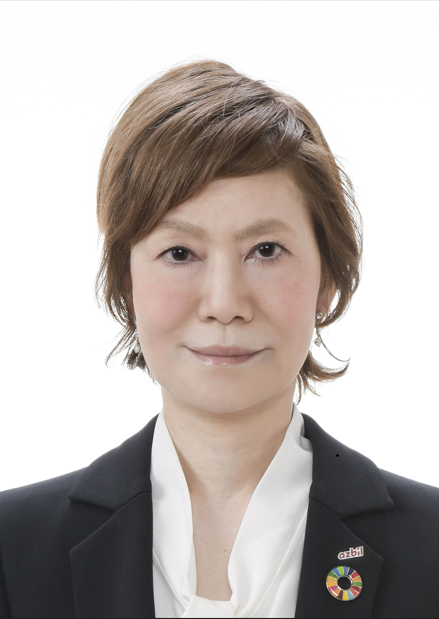
Outside Director
Sachiko Ichikawa