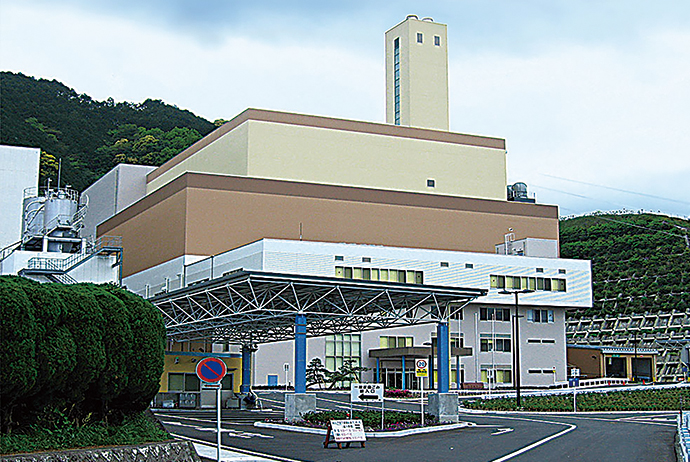
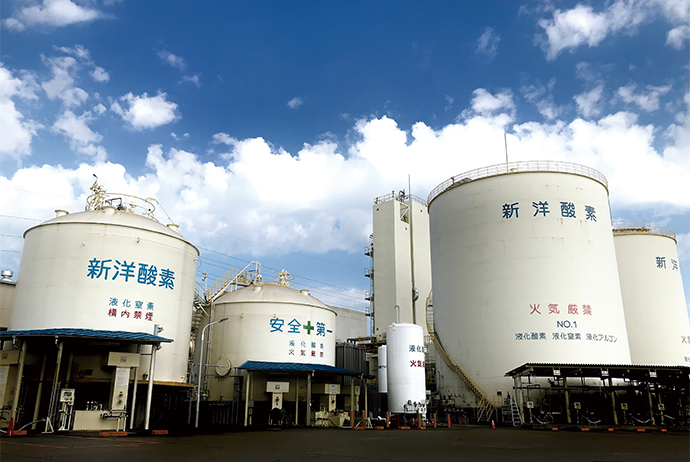
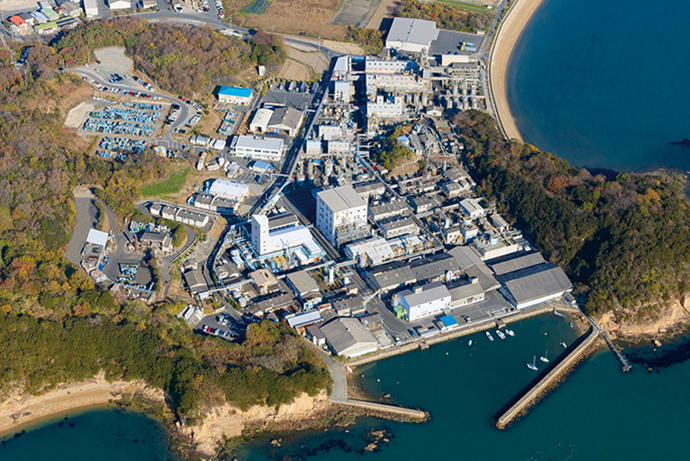
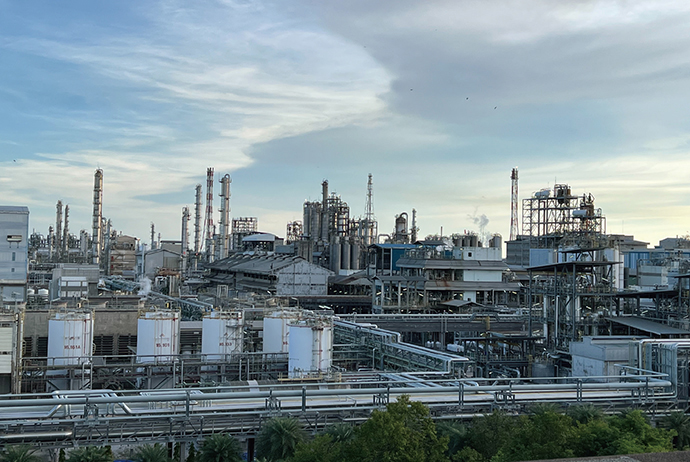
Tosoh Corporation Nanyo Complex
Tosoh is working towards achieving carbon neutrality by 2050. With an eye on this goal, the company has set an interim target to reduce greenhouse gas emissions by 30% from 2018 levels by fiscal year 2030. As part of this effort, the Nanyo Complex has introduced an optimal load balancing system to its six power plants, which boast some of the largest in-house power generation capacities in Japan. This maximizes the plant's power generation efficiency while meeting production demand, achieving a significant reduction in CO2 emissions.
Factories and Plants Chemicals Energy Efficiency Energy Management Cost Reduction Reliable Operation Operation Improvement Industrial Automation Control and Monitoring Systems and Software
Products/Services Provided
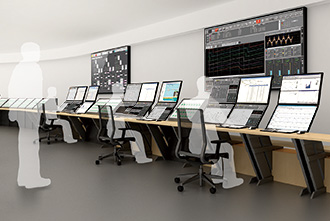
Optimizing the operation of large-scale in-house thermal power generation facilities with an eye toward achieving carbon neutrality
Tosoh Corporation was founded in 1935 with the aim of manufacturing and selling inorganic chemical products such as soda ash and caustic soda. Since then, the company has expanded its business into petrochemical products and specialty chemicals, and is now known as one of Japan's leading comprehensive chemical manufacturers.
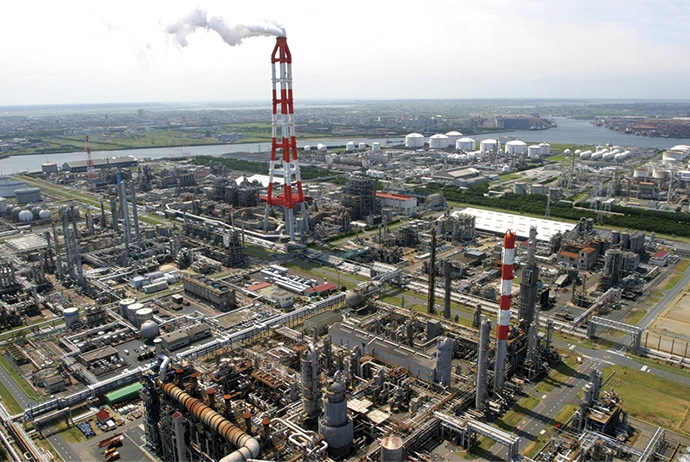
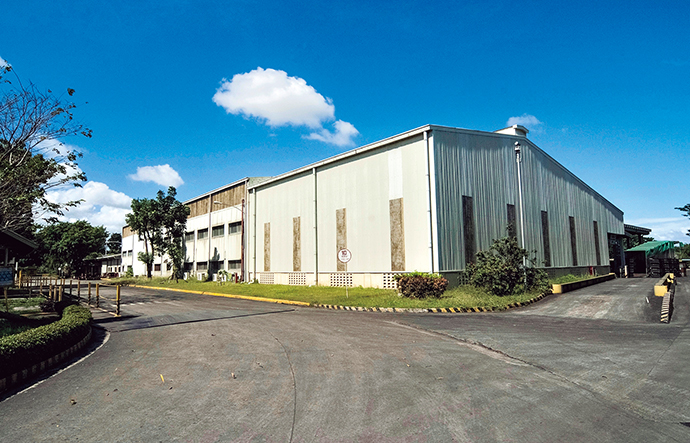
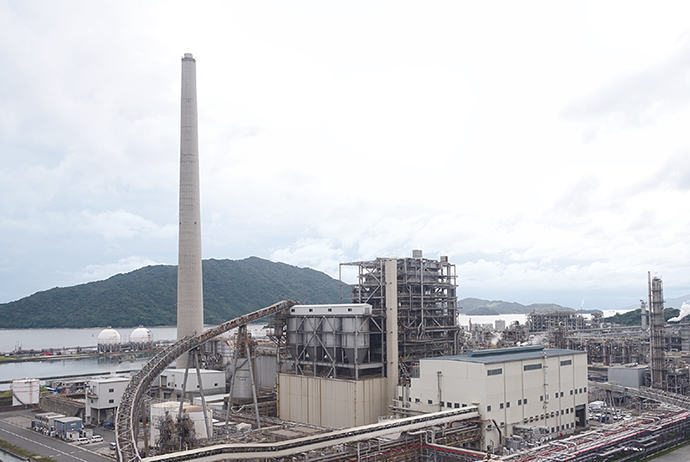
The company's Nanyo Complex is located on a vast 3 million m² site in the Shunan Industrial Complex in Yamaguchi Prefecture, in the western part of Honshu, Japan. The complex operates a vinyl chain business that produces vinyl chloride monomer (VCM) from the electrolysis of salt, and an isocyanate business that produces a raw material for urethane (MDI). Another major feature of the Nanyo Complex is that it is equipped with its own thermal power generation facilities, with a total output of 776.3 MW, one of the largest in Japan for a single company or facility, which is more than enough to power the entire complex's production activities.
"In January 2020, Tosoh formulated a policy to achieve carbon neutrality for the entire group. Tosoh is working towards achieving carbon neutrality by 2050, with an eye on this goal, the company has set an intermediate target to reduce greenhouse gas emissions by 30% from 2018 levels by fiscal year 2030. Among all our challenges, the most important one is reducing the amount of CO2 emitted by our in-house thermal power generation facilities," says Yusuke Ishiga, Manager of Power Supply, Cement & Energy Production.
To achieve this, the Nanyo Complex focused on maximizing power generation efficiency by introducing optimal load balancing (BTG optimization*1) to its six in-house thermal power generation facilities.
"Until now, working in three shifts, the leaders of each team have adjusted the amount of power generated at each plant based on their many years of experience, responding to the needs of the production site. By systemizing these human decisions, we hoped to achieve more precise optimization and reduce CO2 emissions," says Yuya Fujinaga, Cement & Energy Production.
Building solid relationships of trust through high accuracy and detailed response
When implementing the measures, the company requested proposals, primarily from vendors that provide the facility's monitoring and control systems, and then compared and considered them. As a result, the Nanyo Complex ultimately decided to adopt SORTiA-MPC Multi-variable Model Predictive Control proposed by Azbil.
"When making their proposals, each vendor conducted a feasibility study*2 (FS) and demonstrated the specific effects of CO2 reduction. Azbil had a significant advantage over other companies in this regard due to the magnitude of the reduction effects shown in the feasibility study, the clear reasoning behind them, their prompt response to our inquiries, and their track record in this field. Their feasibility study was highly accurate, the report was clear, and it provided grounds for the future effects, which was a major factor supporting our investment decision," says Mr. Fujinaga.
"Through the feasibility study, Azbil carefully checked each and every one of our site's detailed constraints related to the operation of the power plant, and made repeated refinements to ensure that they were met. This sincere attitude has inspired a strong sense of trust in us," says Mr. Ishiga.
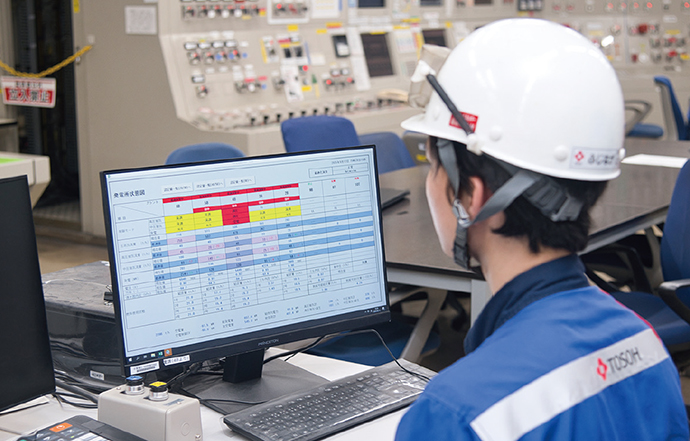
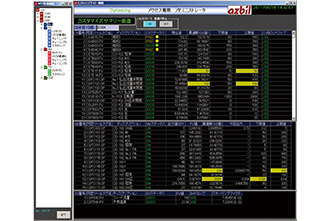
SORTiA-MPC monitoring screen in the central monitoring room of the power plant.
Achieving CO2 emissions reductions through step-by-step implementation
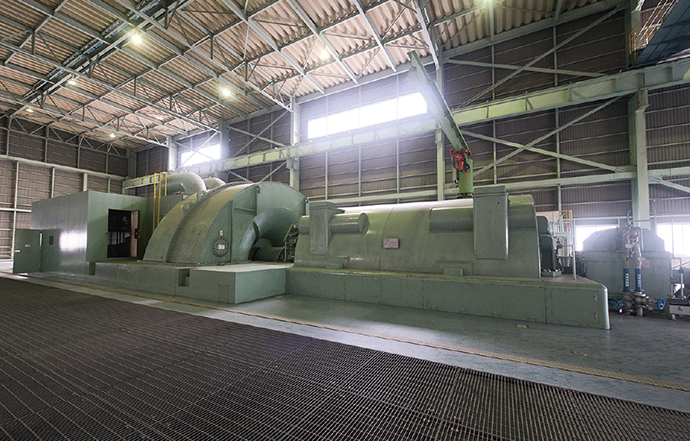
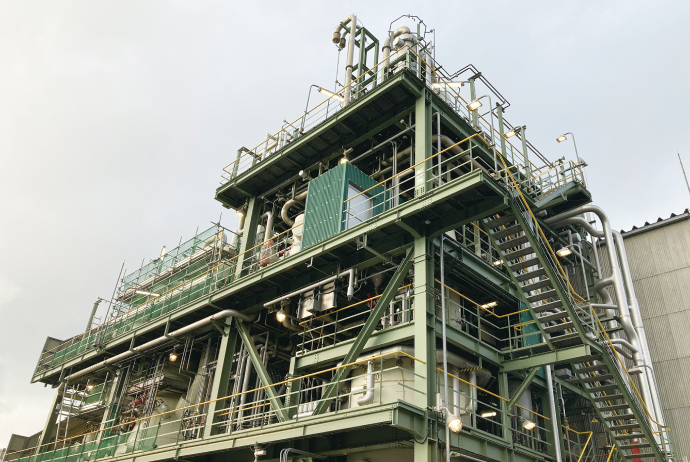
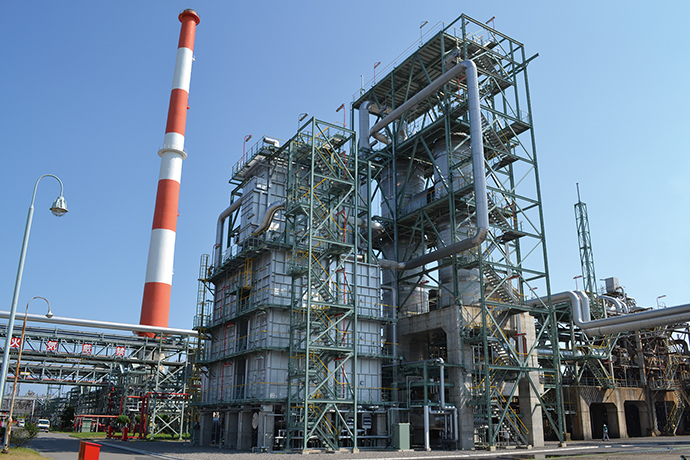
Turbine No. 6 of the in-house thermal power plant
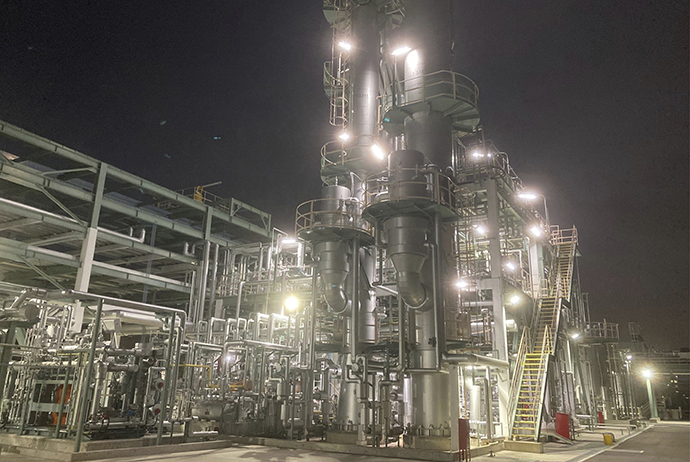
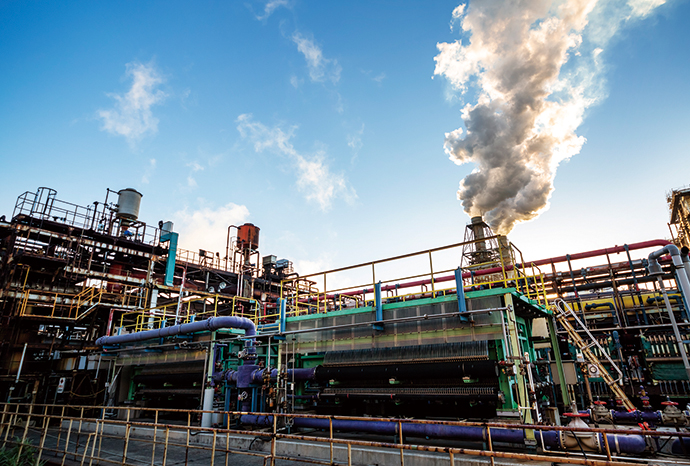
In-house thermal power generation facilities burn coal, hydrogen, biomass fuels, etc. to heat water, generating high-temperature, high-pressure steam, which rotates a steam turbine to generate electricity and also supplies the steam extracted from the turbine to factories. The Nanyo Complex has six such plants, each with different power generation capacities and efficiencies.
The CO2 emission reduction initiative, centered on SORTiA-MPC , was introduced in two steps. Step 1 began in June 2019. The system collects operational data from each plant and, based on operational efficiency, provides guidance on which plants to operate and with what load distribution (optimum power generation and optimal extraction steam volume) in order to minimize CO2 emissions and supply electricity and steam in line with on-site demand. Using this information, operators set the load distribution for each plant and carried out operations. In the past, when people determined load distribution, they often set a generous safety margin just to be on the safe side, which sometimes led to excessive fuel consumption. This issue was resolved by providing this guidance, resulting in a reduction of 26,700 tons of CO2 emissions per year.
Step 2 began in June 2022. At this stage, in order to constantly bring each plant closer to optimal load distribution without operator intervention, a system was established to automatically reflect load target values in each plant's control system (DCS*3), completely automating output adjustments for each plant. This eliminates the need for operator intervention required in Step 1 and eliminates the time lag for input. In addition to the effects of Step 1, we achieved a further reduction of 10,850 tons of CO2 per year.
"Our power plant is the heart of the entire complex's operations. Therefore, our greatest mission is to ensure a reliable supply of power to the manufacturing process through safe and stable operation. Rather than moving straight to full automation, in Step 1 we first had operators carry out operations in accordance with the optimum values indicated by the system for each plant, and then carefully checked the results. This approach allowed us to steadily transition to full automation while minimizing risk," notes Mr. Ishiga.
"The 37,550 t/year CO2 reduction achieved through Steps 1 and 2 far exceeded the value estimated in the feasibility study, thanks in part to a review of the plant's constraints," says Mr. Fujinaga.
Currently, construction of a new in-house thermal power generation facility is underway at the Nanyo Complex. While the previous plant primarily used coal as fuel, the new plant will primarily use biomass such as construction waste, waste paper, and waste plastic in addition to wood-based fuel, with the aim of further reducing CO2 emissions.
"In the future, we aim to operate the plant using only biomass as fuel, which we believe will enable us to achieve a significant reduction in CO2 emissions. Of course, once the new plant is operational, the load balance of the existing plants will change significantly, so the optimal load balancing system will be used even more effectively. We hope that Azbil will continue to support our efforts to reduce CO2 emissions at our facility by providing system maintenance and further tuning, as well as proposing new energy-saving measures," says Mr. Fujinaga.
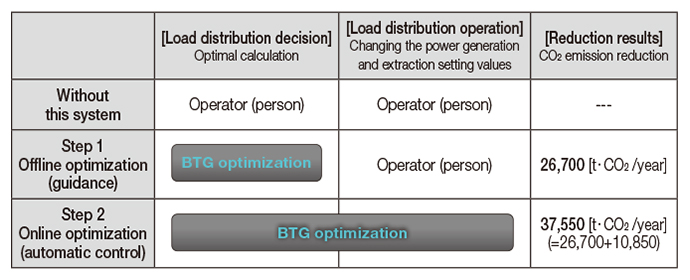
Phased introduction of optimal load balancing (BTG optimization) system and its effects
glossary
1. BTG optimization
This is an optimization technology that realizes operation with minimal CO2 emissions, energy consumption, and energy costs for power equipment such as boilers, turbines, and generators, taking into account various constraints.
2. Feasibility study
Investigation and research conducted before starting a project to determine whether a plan is feasible, and to what extent it might be effective. Also known as a feasibility analysis.
3. Distributed control system (DCS)
A dedicated system for monitoring and controlling the manufacturing processes and production equipment of plants and factories. To achieve an even distribution of load, the DCS manages the functions of each device over a network, resulting in safety and excellent maintainability.
Learn about the customer
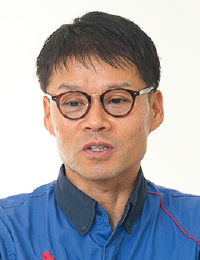
Manager of Power Supply
Cement & Energy Production
CO2 Reduction and Effective Utilization Nanyo Task Force Team
Nanyo Complex
Tosoh Corporation
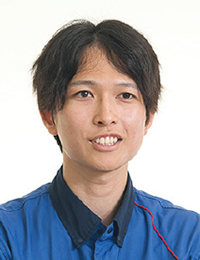
Assistant to the General Manager
Cement & Energy Production
Nanyo Complex
Tosoh Corporation
Tosoh Corporation Nanyo Complex
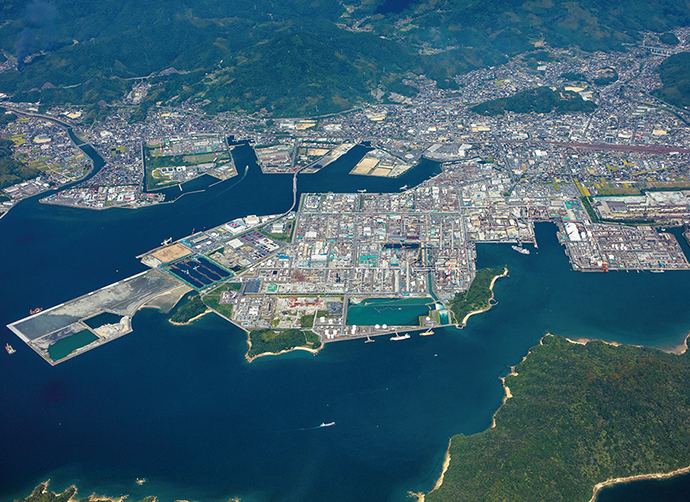
- Address: 4560 Kaisei-cho, Shunan City, Yamaguchi Prefecture
- Established: February 11, 1935
- Business: Production of caustic soda, vinyl chloride monomer, polyethylene, ethyleneamine, etc.
*SORTiA is a trademark of Azbil Corporation in Japan.
*This article was translated from the Japanese version.
This article was published in March 2026.