Tennoz Area Service Inc.
Tennoz Area Service Inc., which operates a district heating and cooling plant, undertook a major modernization project to address the aging plant equipment after more than 30 years since the facility began service in 1991. This involved the replacement of the central monitoring system and instrumentation systems. By leveraging digital twin technology aimed at improving energy efficiency and strengthening the business continuity plan (BCP) for the plant, the company has optimized the operation of key equipment such as chillers and cooling towers to maximize energy efficiency.
Factories and Plants Other (Markets and Industries) Energy Efficiency Energy Management Maintenance Support Industrial Automation Control and Monitoring Systems and Software Temperature Controllers, Other Controllers, and Recorders
Products/Services Provided
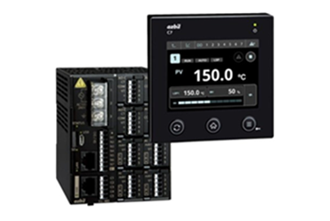
Replacement of the central monitoring system with emphasis on operational efficiency and BCP
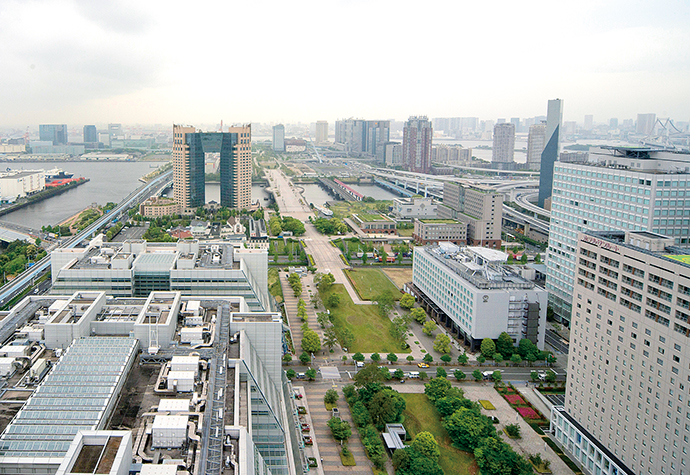
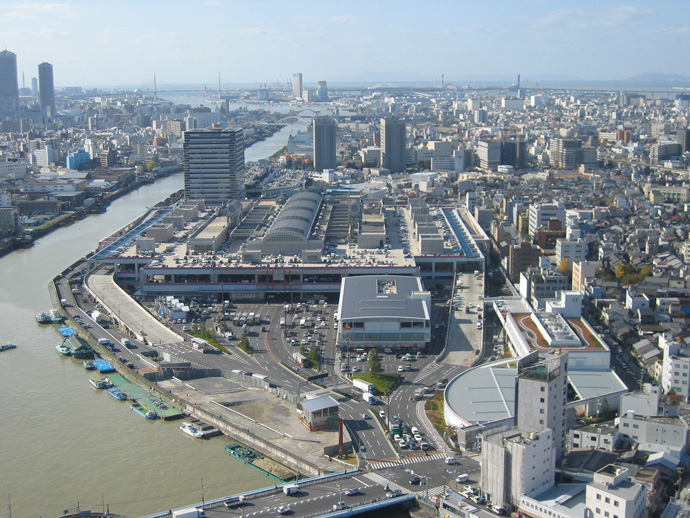
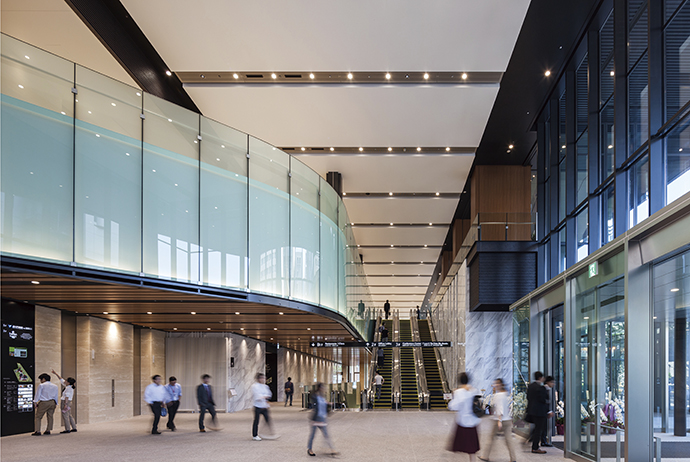
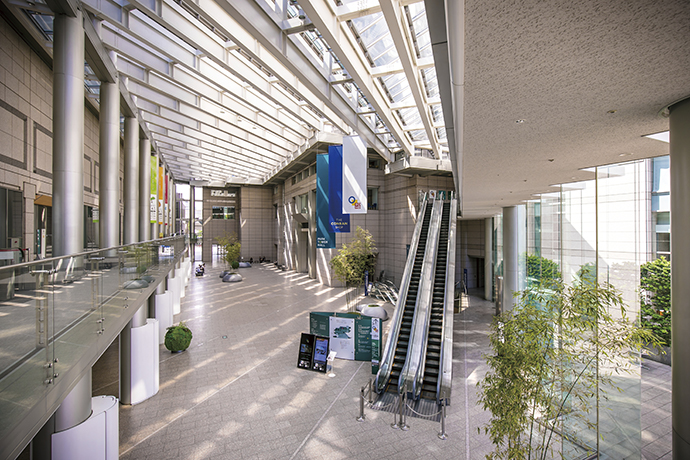
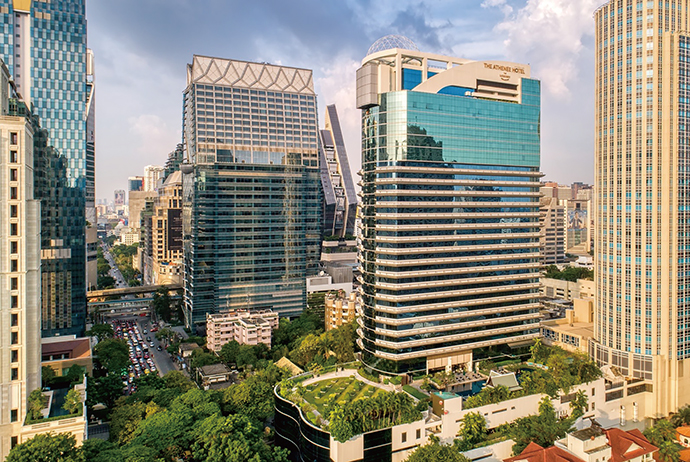
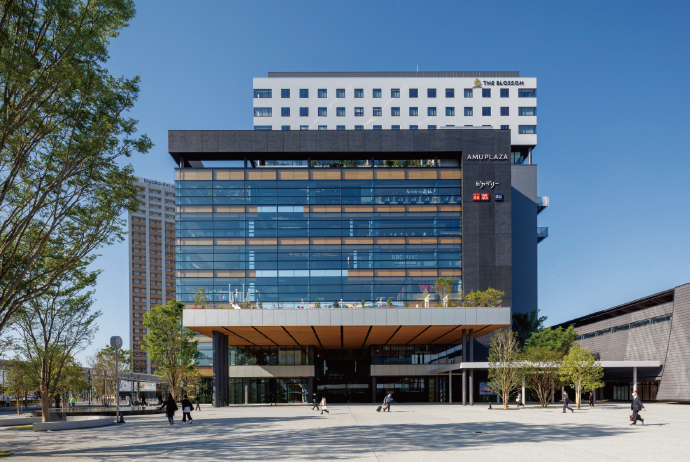
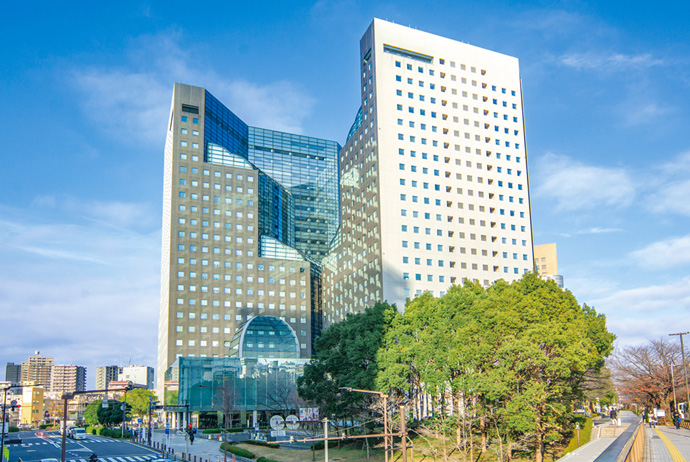
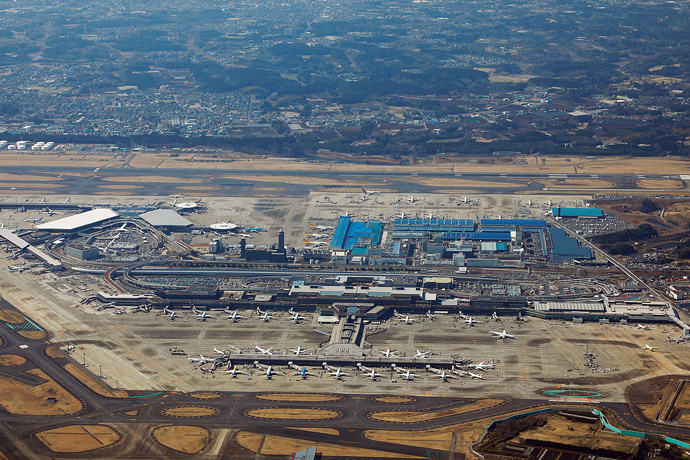
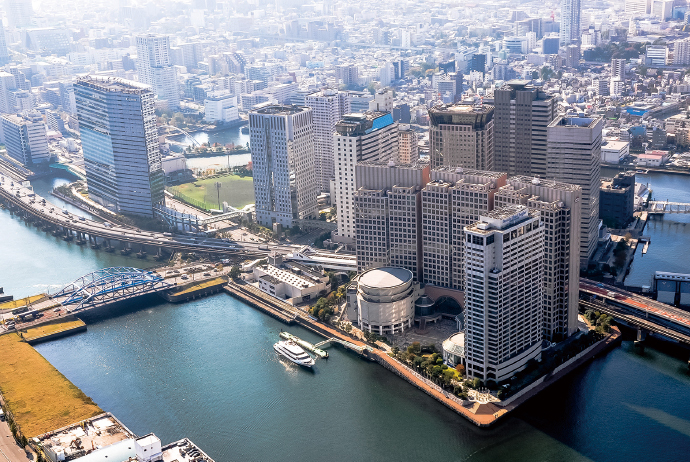
Tennoz Isle is a district of approximately 20 hectares located in southern Tokyo and it is surrounded by canals. The area is conveniently located, with easy access to both central Tokyo and Haneda Airport, and provides an attractive waterfront environment. These features are helping Tennoz Isle to develop as a home to office buildings and other business facilities and as an area that puts people's needs first.
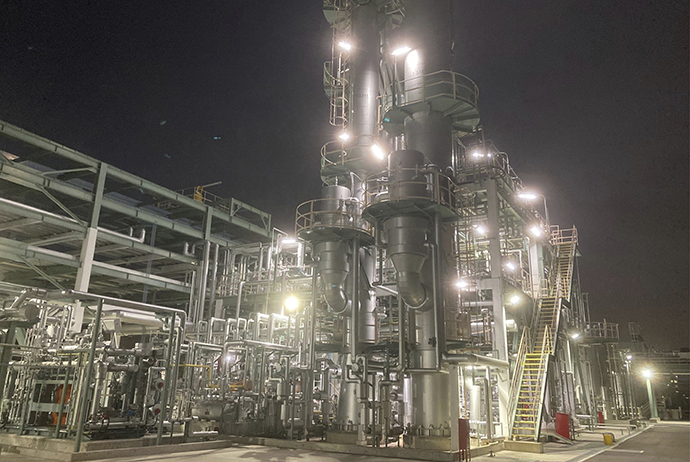
Tennoz Area Service Inc. operates a district heating and cooling (DHC)*1 plant, which produces chilled water and steam to be used as thermal media for HVAC systems, and supplies heat (cooling and heating energy) to 14 buildings within the district, including office buildings, a theater, a hotel, and a railway station.
“After more than 30 years of operation, the DHC plant aged and parts for maintenance were becoming difficult to obtain. So, around 2022, we decided to modernize the equipment, including the central monitoring system,” says Takashi Itakura, President of Tennoz Area Service Inc.
“In addition to addressing the aging equipment, we aimed to standardize operation planning and operating procedures, which had previously been dependent largely on each operator’s expertise, as well as to take steps toward energy efficiency and business continuity plans (BCP)*2,” says Masahiko Muramatsu, General Manager of the Engineering Department.
The system guides operators with an optimized 24-hour operating plan
Tennoz Area Service conducted a competitive bidding process among providers of instrumentation systems and engineering services for the project scope related to plant operation management. As a result, Azbil Corporation won the bid by proposing Harmonas-DEO™, a harmonized automation system that can monitor and control plants, and the Utility Optimization System (U-OPT™) , which provides guidance for optimal operation of heating/cooling equipment.
“Since the plant began service in 1991, we had continuously been using Azbil’s central monitoring system, and the fact that they are thoroughly familiar with our equipment was the deciding factor in our selection.” says Mr. Itakura.
“As the project involved the replacement of the central monitoring system, we were concerned that we would have to temporarily operate the plant without monitoring. Responding to this concern, Azbil proposed a transition process with minimum downtime, based on their rich experience,” says Mr. Muramatsu.
Construction for the modernization project began in March 2024. After thorough preparation, the 14 receiving station metering panels*3 were replaced in phases, and in December, the system transition was completed without interrupting the heat supply.
Considering a range of factors, including outdoor conditions and weather data, as well as scheduled events and office usage patterns, U-OPT, a system that provides guidance for optimal operation, was installed to oversee 10 chillers, aside from the upgrade of the central monitoring system.
“Operators tend to start up chillers earlier than needed because maintaining a stable supply is our top priority. By trying to be on the safe side, they are inevitably consuming more energy than is necessary,” says Mr. Muramatsu.
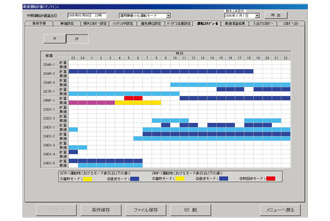
U-OPT presents 24-hour operational plans in 30-minute blocks by determining when to start up and shut down the chillers for the best energy efficiency. Operators can maintain optimized operations according to the presented operational plans.
“The introduction of U-OPT has made plant operations more visible, enabling us to identify and discuss other areas that need improvement. We are still in the process of fine-tuning the system and refining the optimization algorithms,” says Mr. Itakura.
Furthermore, Tennoz Area Service had the U-OPT servers built in a redundant configuration located in the basement and installed mirrored servers on the 15th floor of the building where its headquarters is located.
“Our facility is protected against flood tides to prepare for the tsunami that would follow a massive earthquake. It was also for BCP purposes that we decided to install the mirrored servers on the 15th floor, where there is no risk of flooding,” says Mr. Muramatsu.
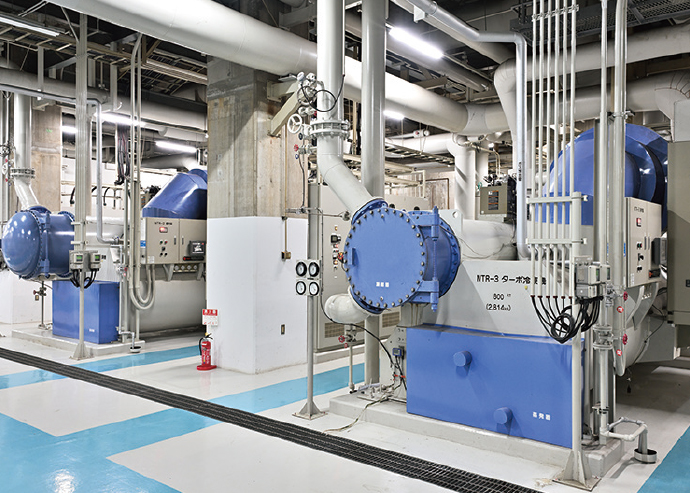
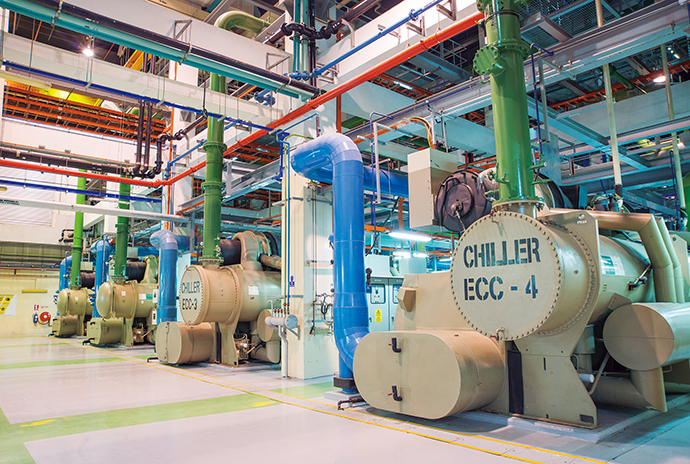
This electric turbo chiller produces chilled water, which is then supplied to customers through pipelines.
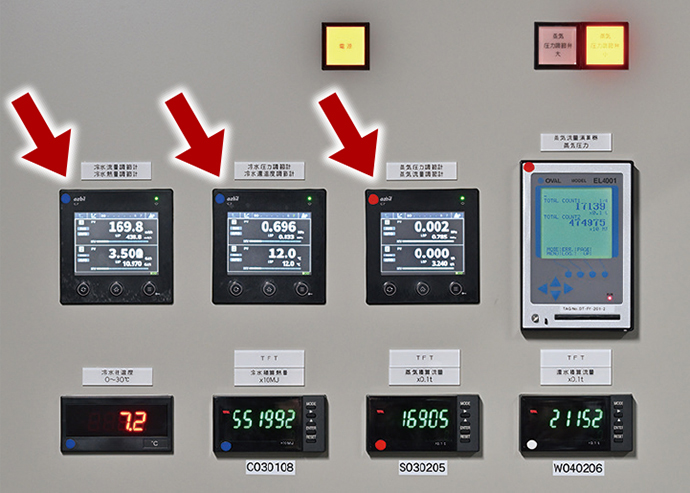
Multi-Loop Controller with Multifunction Display Model C7G mounted on the customer's receiving station metering panel. These devices control the flow rate, thermal energy, and pressure of chilled water and steam.
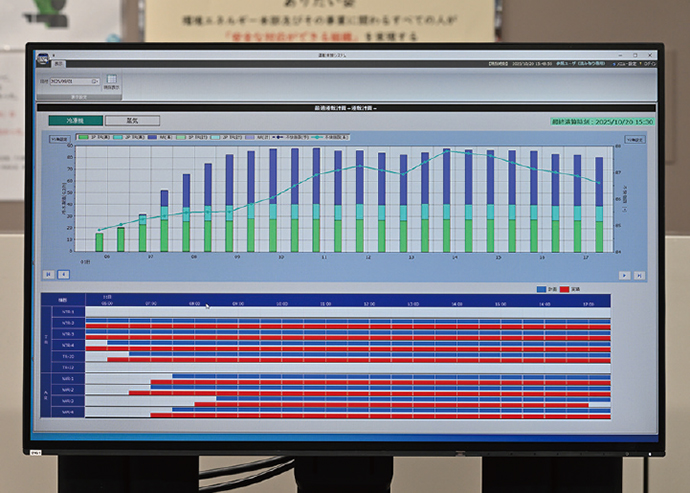
The monitor screen of U-OPT shows guidance for optimal chiller operations for the next 24 hours in 30-minute blocks.
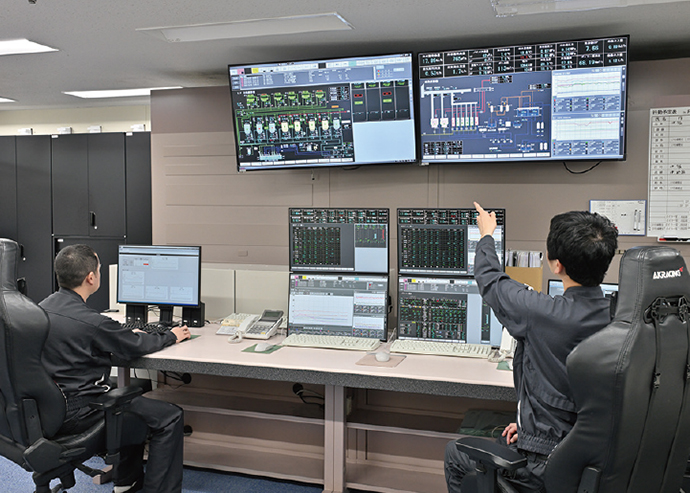
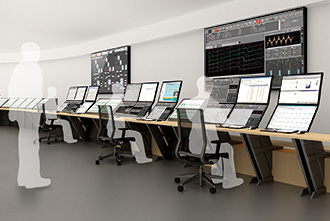
Harmonas-DEO monitors and controls the district heat supply plant. The system displays information other than the monitoring pane, such as weather data and security camera footage on the same screens, creating an environment where all operators can ascertain the overall situation at a glance.
Digital twin for optimizing operation of cooling water system equipment
Along with the above installations, Tennoz Area Service introduced a mechanism to optimize the operation of the cooling water system equipment for chillers with the goal of enhancing energy efficiency throughout the plant. The operator of a DHC plant can expect to save energy by reducing the power consumption of the cooling tower.
In DHC plants, cooling tower fans are activated when the cooling water temperature exceeds a predefined threshold. However, depending on outdoor conditions, the fans may not need to operate, making the selection of this threshold particularly important.
“We can either increase chiller efficiency by lowering the cooling water temperature by activating the cooling tower fans or accept a slight reduction in chiller efficiency by reducing the power consumption of the cooling tower fans, which would result in slightly higher cooling water temperatures. Mathematically determining the optimal balance between these two approaches by hand would be extremely difficult,” says Mr. Muramatsu.
In contrast, Azbil provides a cooling water optimization system that can perform the computations needed for optimization with digital twin*4 technology. Based on operational data on the cooling water system equipment, such as chillers, cooling water pumps, and cooling towers, the digital twin can reproduce the real-world operating conditions in a virtual space. In addition to determining the cooling water temperature threshold, the system determines the optimal operating patterns that would maximize energy efficiency, and offers operational guidance in 10-minute blocks. Operators operate the plant based on this guidance. The benefits are particularly significant during the intermediate seasons. In May 2025, the power consumption of the cooling towers was successfully reduced by approximately 5%.
“We expect that this new system will allow us to quickly train newly assigned operators to reliably operate the plant, hopefully helping to mitigate our labor shortage. We hope to ensure consistent operations regardless of the experience of the operators,” says Nobuyuki Hokazono, General Manager of the General Affairs and Accounting Department.
“Going forward, we even aim to realize local production and consumption of electricity by incorporating wind and solar power, leveraging the geographical characteristics of the Tennoz area. To achieve this future vision, we look forward to the continued cooperation from Azbil, especially because of its engineering strengths,” says Mr. Itakura.
Harmonas-DEO and U-OPT are trademarks of Azbil Corporation in Japan.
glossary
*1. District heating and cooling (DHC)
A system that supplies chilled water, hot water, and steam from a centrally managed heat supply plant to multiple buildings within a specified area through underground local pipelines, for use in services such as air-conditioning, heating, and hot-water supply in these buildings.
*2. Business continuity plans (BCP)
Business continuity plans are developed to ensure that companies can continue their critical operations even in the event of an emergency, such as a natural disaster or a major accident. These plans are expected to help minimize business disruptions and facilitate rapid recovery.
*3. Receiving station metering panels
Control panels installed at the customers’ sites (e.g., buildings and facilities) in district heating and cooling or energy supply systems. The panel contains control devices such as heat meters and controllers for control valves.
*4. Digital twin
A technology that can digitally reproduce in virtual space a real-world physical environment, based on data collected through IoT and other systems.
Learn about the customer
President
Tennoz Area Service Inc.
General Manager
Engineering Department
Tennoz Area Service Inc.

General Manager
General Affairs and Accounting Department
Tennoz Area Service Inc.
Tennoz Area Service Inc.
- Location: 15F, Tennoz First Tower, 2-2-4 Higashi-shinagawa, Shinagawa-ku, Tokyo
- Establishment: December 1988
- Business activities: Heat supply to the entire Tennoz Isle area
This is a translation of the Japanese version.
This article was published in May 2026.